Every life coach knows about the Wheel of Life. It’s the classic life balance wheel that’s been helping clients visualize where they stand since the 1960s. But here’s what most coaches miss: 90% are using it wrong.
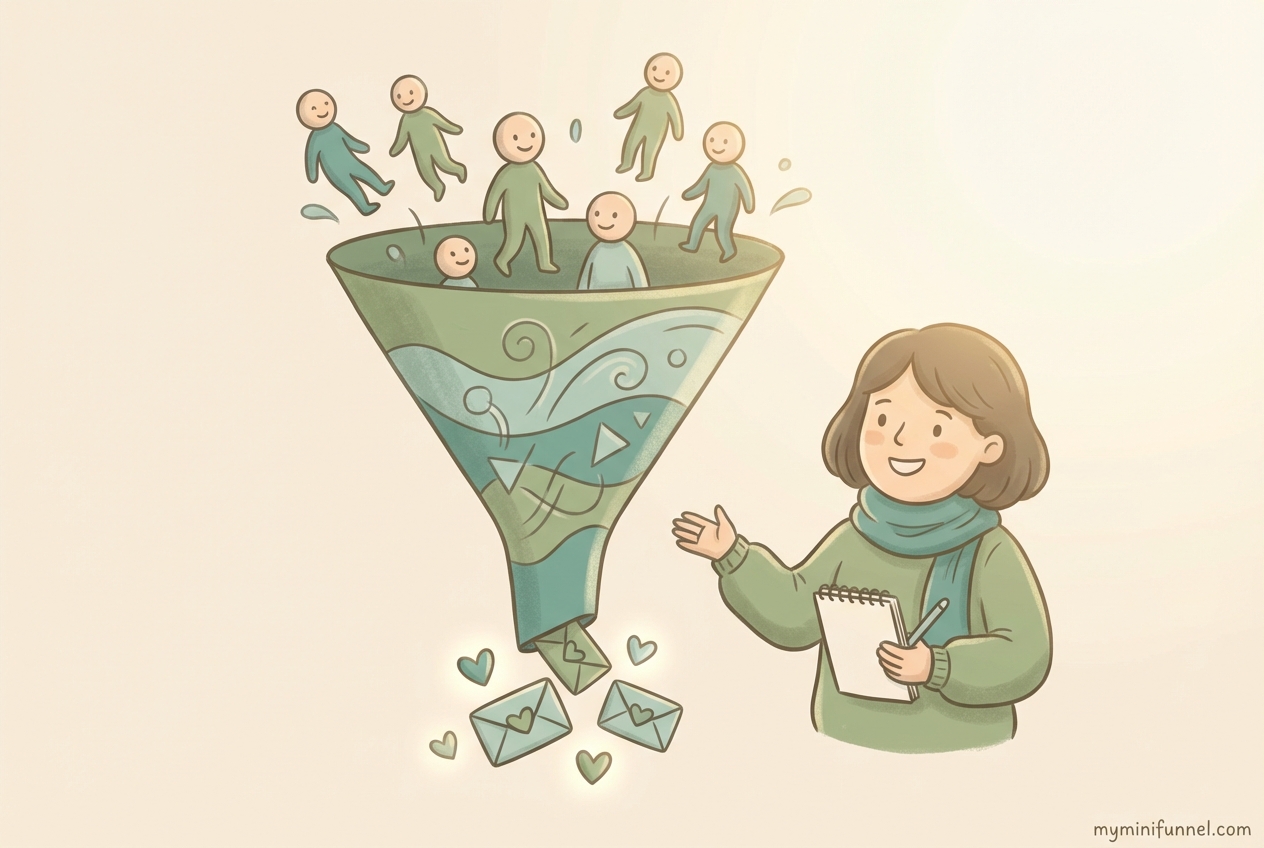
They pull it out in session one, have clients rate eight life areas on a scale of 1-10, maybe set a few goals, and then… file it away. Meanwhile, that same wheel of life assessment could be working for you around the clock, bringing in qualified leads while you sleep.
The Wheel of Life isn’t just a coaching exercise. It’s one of the most effective lead magnets you can offer as a coach. When done right, interactive assessments like this convert at 40%+ compared to 3-10% for typical PDF downloads.
In this guide, you’ll learn exactly how to use the Wheel of Life assessment both in your coaching sessions AND as a lead generation tool. We’ll cover the eight categories, powerful coaching questions, and how to set up your own interactive wheel in about 10 minutes.
What Is the Wheel of Life Assessment?
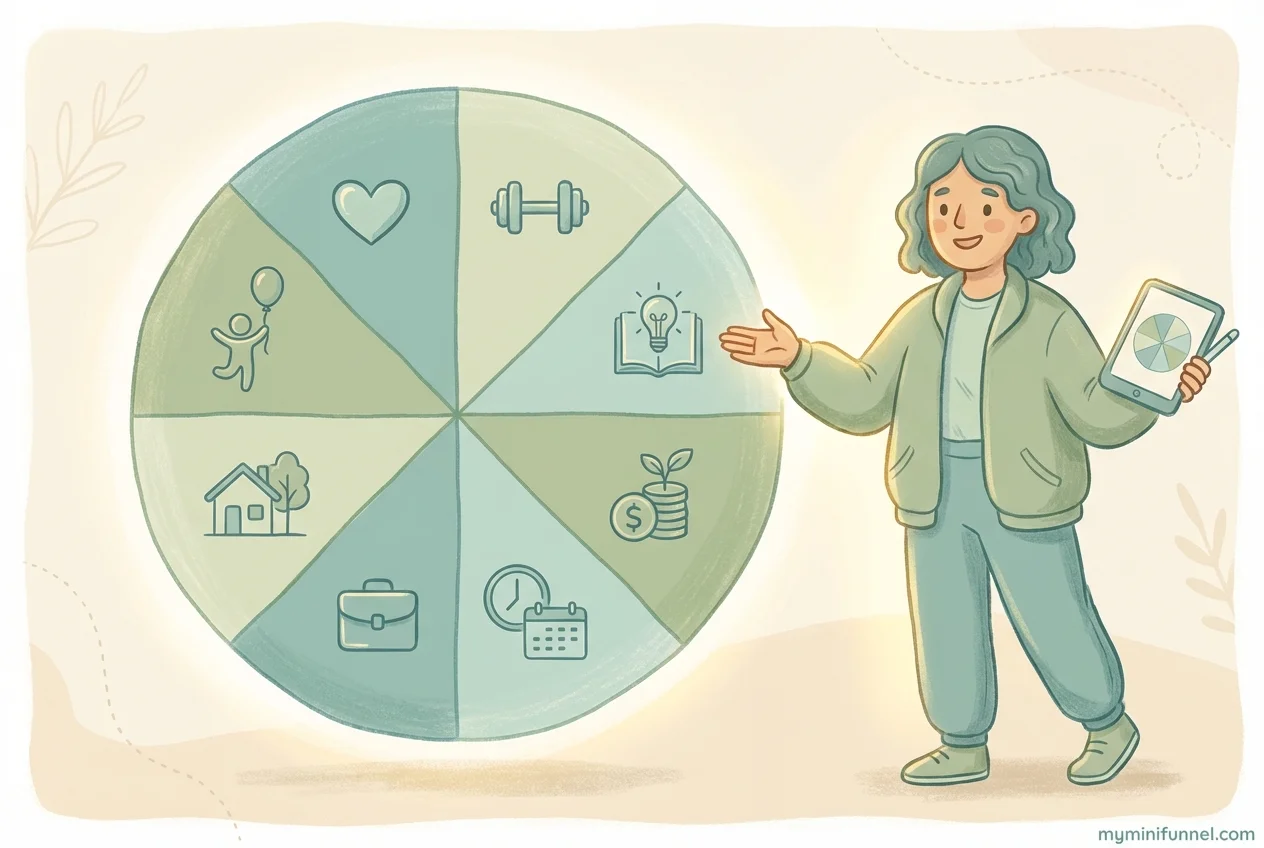
A Wheel of Life assessment is a visual coaching tool that helps people evaluate their satisfaction across different areas of life. Clients rate each life area on a scale of 1-10, creating a visual “wheel” that instantly reveals which parts of their life feel balanced and which need attention.
The concept was created by Paul J. Meyer in the 1960s. Meyer was a pioneer in personal development, and his original wheel had just six categories. Today, most coaches use eight to ten categories, though the core idea remains the same: give clients a bird’s-eye view of their life in a single glance.
Why has this simple tool stuck around for 60+ years? Because it works. The wheel format makes abstract concepts concrete. Instead of vaguely feeling “off balance,” clients can point to their wheel and say, “My health is at a 4, but my career is at an 8. That’s the gap I want to close.”
According to Positive Psychology research, the Wheel of Life connects to fundamental psychological needs: autonomy (choosing what to focus on), competence (tracking improvement over time), and relatedness (sharing the journey with a coach).
For coaches, this makes the wheel of life coaching tool incredibly versatile. Use it for intake sessions, quarterly check-ins, goal setting, or tracking progress over a coaching engagement.
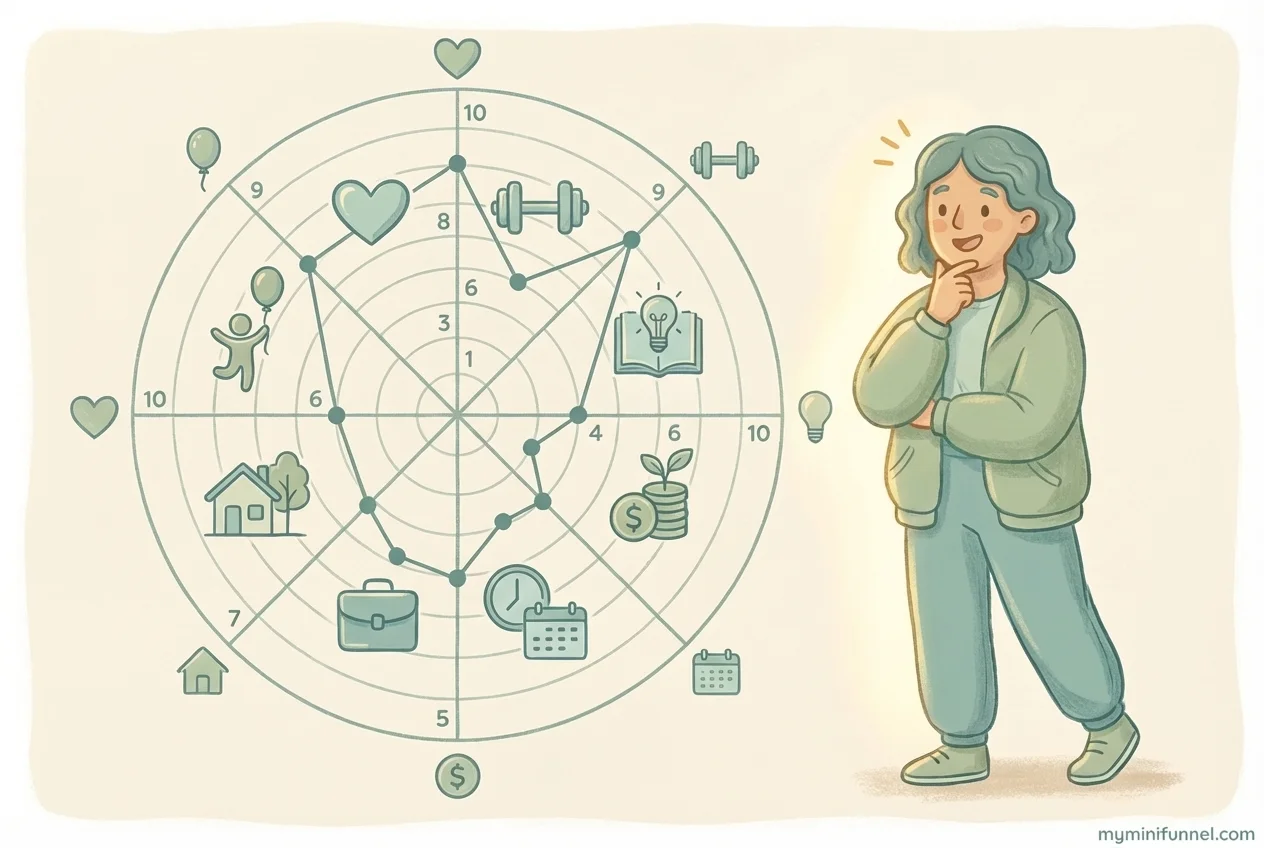
The 8 Wheel of Life Categories
The standard wheel of life assessment includes eight categories. While you can customize these (more on that below), here’s what most coaches start with:
1. Health and Wellness
Physical and mental wellbeing. This includes fitness, nutrition, sleep, energy levels, and overall vitality. For many clients, this category underpins everything else.
2. Career and Work
Satisfaction with professional life. This covers job fulfillment, career growth, work relationships, and alignment between work and personal values.
3. Finances and Money
Financial stability and freedom. This includes income, savings, debt, and the relationship between money and life goals.
4. Relationships and Family
Connection with loved ones. This encompasses romantic relationships, family bonds, friendships, and the quality of social connections.
5. Personal Growth and Learning
Continuous development and self-improvement. This covers learning new skills, pursuing interests, and investing in personal development.
6. Fun and Recreation
Joy and leisure in life. This includes hobbies, relaxation, play, and activities done purely for enjoyment.
7. Physical Environment
Satisfaction with surroundings. This covers home, workspace, neighborhood, and the physical spaces where life happens.
8. Contribution and Community
Giving back and making a difference. This includes volunteering, community involvement, and feeling part of something larger.

Customizing Categories for Your Coaching Niche
The beauty of the Wheel of Life is its flexibility. You can (and should) adapt categories to fit your specific coaching focus:
For wellness and health coaches: Split “Health” into separate categories like “Nutrition,” “Physical Fitness,” “Sleep,” and “Mental Health.” This gives clients more granular insight into their wellness picture. You might also consider pairing the Wheel of Life with a stress level quiz for deeper mental health insights.
For fitness coaches: Add “Physical Activity” separate from general health. Consider including “Body Confidence” or “Athletic Goals” depending on your clientele.
For life coaches: The standard eight categories usually work well. You might rename “Contribution” to “Purpose” or “Meaning” depending on your coaching philosophy. For client onboarding, consider combining this with a coaching readiness assessment to qualify leads.
For business coaches: Replace some personal categories with professional ones: “Leadership,” “Team,” “Business Growth,” “Work-Life Integration,” or “Professional Network.”
The key is making the wheel of life categories relevant to your clients’ goals. When someone takes a Wheel of Life quiz and the categories match their actual concerns, engagement goes up significantly. Browse our 15 coach-specific templates to see other assessment options for your niche.
How to Use the Wheel of Life in Coaching Sessions
Here’s a step-by-step process for facilitating a Wheel of Life assessment with clients:
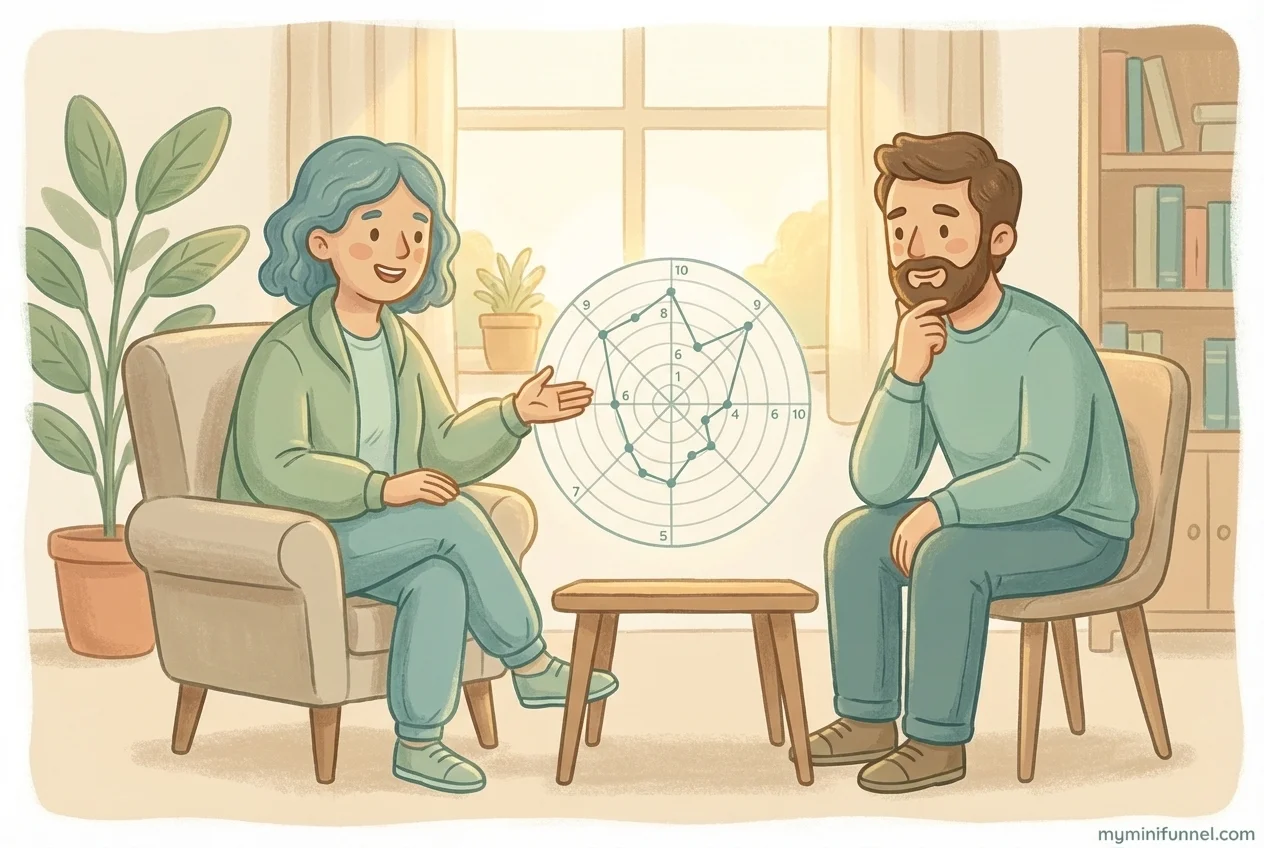
Step 1: Set the Context
Explain what the wheel is and why you’re using it. Something like: “This exercise gives us a snapshot of where you are right now. There are no right or wrong answers. It’s completely subjective and based on how YOU feel about each area.”
This framing matters. Clients sometimes try to give “correct” answers or rate areas based on what they think they “should” feel. Remind them it’s about their honest perception in this moment.
Step 2: Walk Through the Self-Assessment
Have clients rate each category from 1-10, where 1 means “completely dissatisfied” and 10 means “completely fulfilled.” Give them time to reflect on each area.
Some coaches prefer to have clients complete the wheel before the session so you can dive straight into discussion. Others like to be present during the rating process to observe reactions and ask clarifying questions.
Step 3: Explore the Results
Once the wheel is complete, ask open-ended questions:
- “What do you notice about your wheel?”
- “Any surprises here?”
- “Which scores feel most accurate? Any you’re unsure about?”
- “If you could instantly change one score, which would it be?”
Resist the urge to interpret for them. Let clients draw their own insights first.
Step 4: Identify Focus Areas
Help clients choose one or two areas to focus on. The lowest scores aren’t automatically the priority. Sometimes a client rates “Fun” at a 3 but genuinely doesn’t care. Other times, moving a 6 to an 8 in “Career” is the real goal.
Ask: “If you could only improve one area over the next three months, which would make the biggest positive difference in your life?”
Step 5: Create an Action Plan
Turn insights into commitments. For the chosen focus area(s), help clients identify:
- Specific goals (what does a “10” look like?)
- First steps they can take this week
- Potential obstacles and how to handle them
- How they’ll know they’re making progress
Schedule a follow-up wheel assessment for 90 days later. Comparing wheels over time is one of the most powerful ways to show coaching progress.
Why the Wheel of Life Makes the Perfect Lead Magnet
Here’s where most coaches miss the opportunity. The Wheel of Life isn’t just a client tool. It’s potentially your best lead magnet. In our complete guide to lead capture for coaches, we cover how interactive assessments outperform traditional lead magnets.
Think about it from your ideal client’s perspective. They’re scrolling Instagram, feeling vaguely “off” about their life. They see a link to take a “Life Balance Assessment.” They’re curious. They click.
In two minutes, they’ve answered questions about eight life areas. They see their results displayed on a visual life balance wheel. Maybe their “Health” score is a 3 while “Career” is an 8. Suddenly, that vague “off” feeling has a name. They think, “I really do need to focus on my health.”
And now they’re on your email list, having just experienced a taste of what coaching feels like.
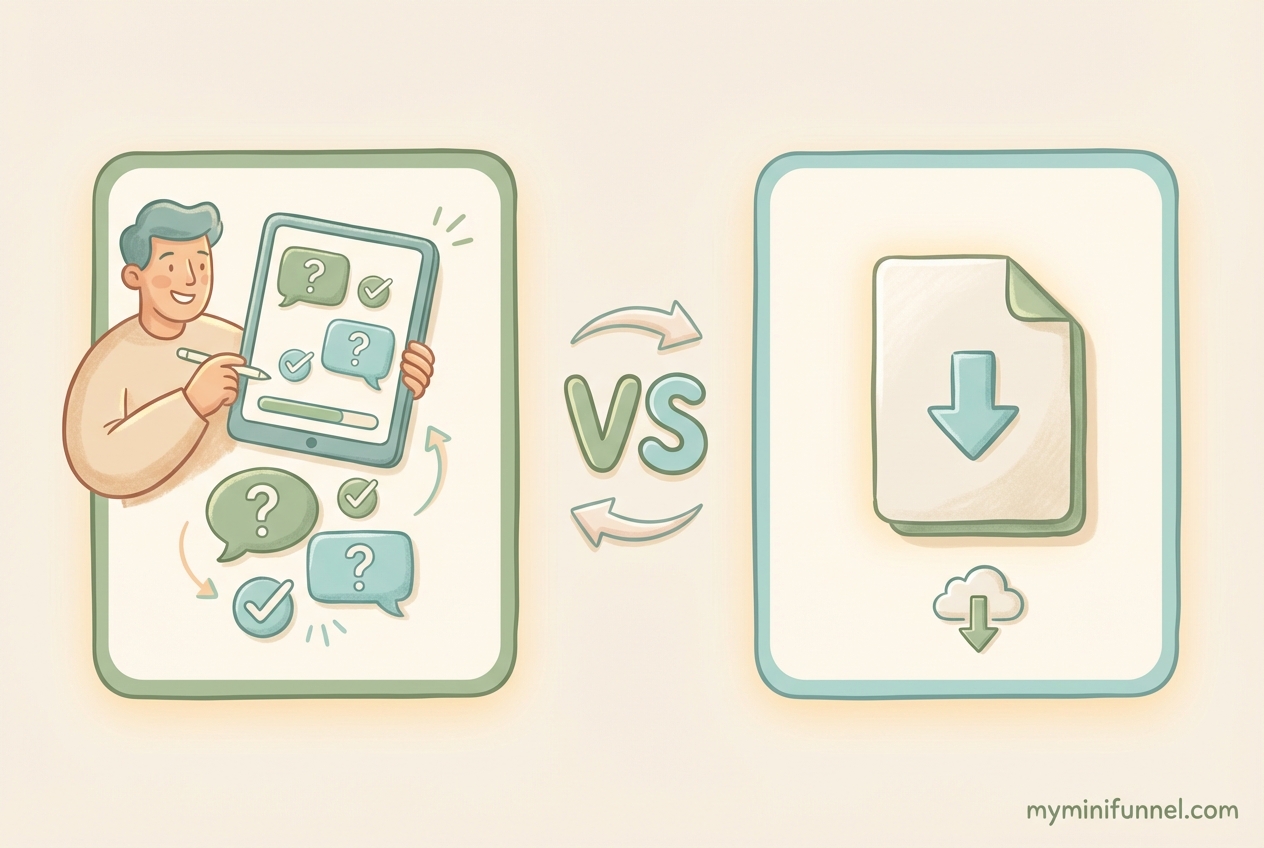
This is why interactive quizzes convert at 40.1% while typical PDF lead magnets convert at just 3-10%. We break down this comparison in depth in our article on interactive vs static lead magnets for coaches. The quiz provides immediate value. The PDF promises value later (and often goes unread).
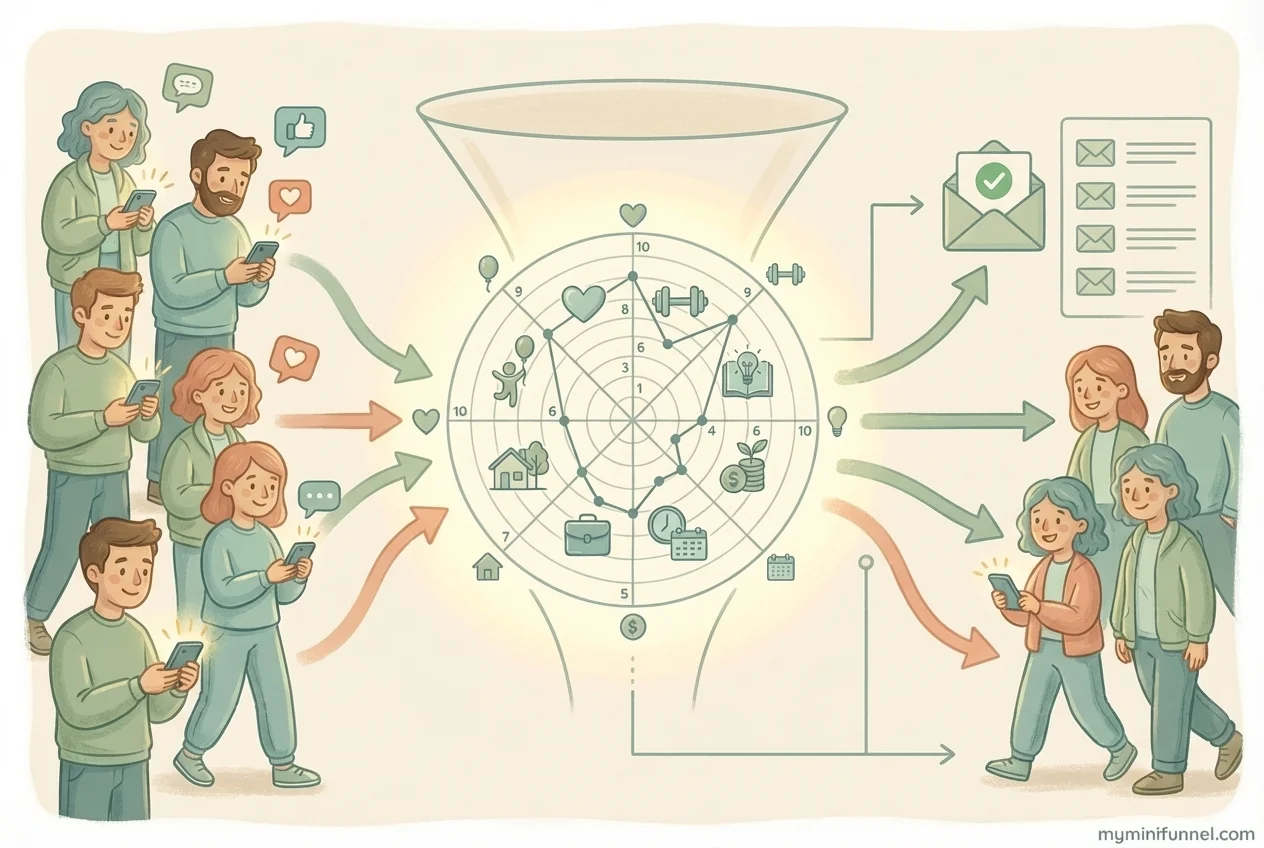
The Data Advantage
When someone downloads a PDF, you get their email address. That’s it.
When someone completes your Wheel of Life assessment, you get their email address AND their scores. You know their lowest-rated life area. You know where they’re struggling.
This means your follow-up can be personalized: “I noticed your Health score was the lowest on your wheel. Here are three simple changes that have helped my clients boost their energy…”
That kind of relevant follow-up converts to discovery calls far better than generic nurture sequences.
Natural Bridge to Coaching
The Wheel of Life assessment creates a natural conversation starter. When someone books a discovery call, you can reference their results: “I saw from your assessment that Relationships is your biggest challenge right now. Tell me more about that.”
Clients come to the call already warmed up, already thinking about their goals, already experiencing a small version of what coaching with you might feel like. If you’re exploring other options beyond the Wheel of Life, we cover 12 lead magnet ideas for life coaches ranked by conversion rate.
Paper vs Digital: Why Interactive Wins
Traditionally, coaches used paper Wheel of Life worksheets. You’d print them out, hand them to clients, have them shade in sections. It worked fine for in-person sessions.
But paper has serious limitations for lead generation:
Paper limitations:
- One-time use only
- No contact information captured
- No data for follow-up personalization
- Can’t be shared on social media or websites
- Results aren’t stored anywhere
Digital/interactive advantages:
- Captures email addresses automatically
- Stores all results for follow-up
- Works perfectly on mobile (where your followers are)
- Shareable via link or embed
- Results display beautifully and instantly
- Integrates with your email marketing tools
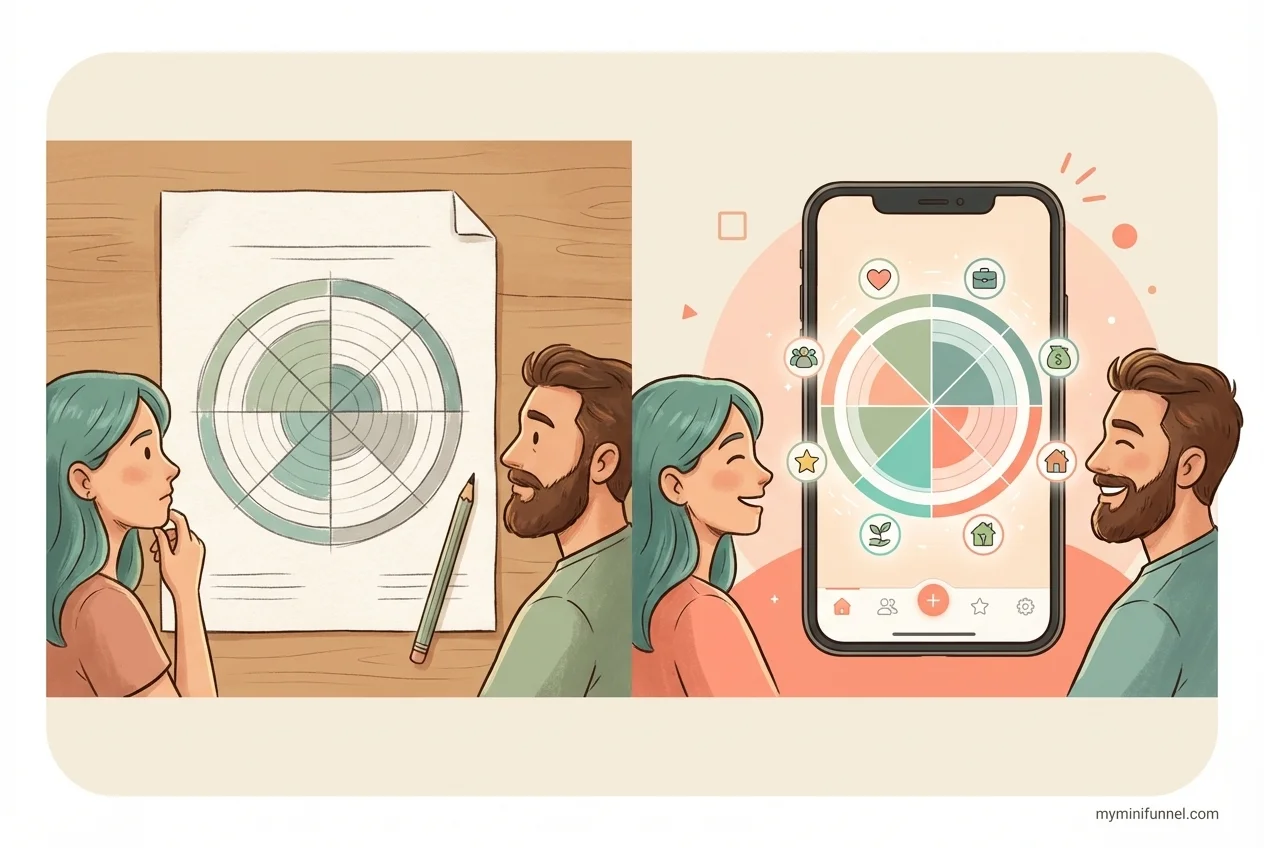
According to The Coaching Tools Company, their free Wheel of Life template has been downloaded over 350,000 times. That’s a lot of paper wheels being printed. But imagine if even 10% of those coaches had an interactive version capturing leads instead.
The coaching industry is worth $7.31 billion in 2025 and growing at nearly 10% annually. With over 122,000 active coaches worldwide, competition for clients is real. If you’re just starting out, our guide on how to get your first leads as a new coach covers the fundamentals. The coaches who use modern tools to capture and nurture leads have a significant advantage.
How to Create Your Wheel of Life Lead Magnet
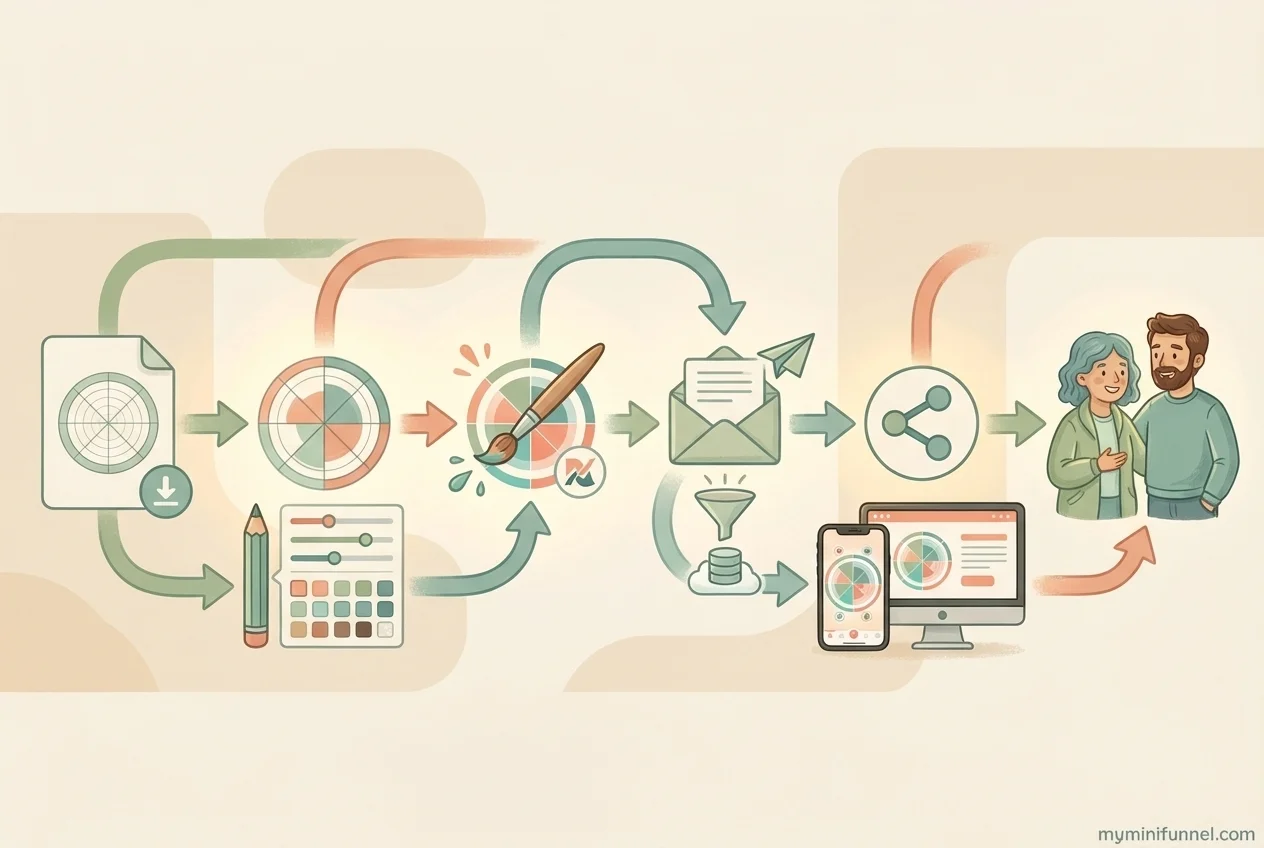
Ready to turn the Wheel of Life into your lead generation machine? Here’s how to set one up in about 10 minutes using My Mini Funnel’s Wheel of Life template:
Step 1: Start with the Template
Sign up for a free My Mini Funnel account and select the Wheel of Life template from our library. The eight standard categories are already set up with appropriate questions.
Step 2: Customize Categories for Your Niche
If you’re a wellness coach, you might want to rename “Health” to “Physical Wellness” and add “Mental Wellness” as a separate category. If you’re a business coach, swap in professional categories.
The wheel of life template is fully customizable. Change category names, adjust the questions, make it fit your specific audience.
Step 3: Add Your Branding
Upload your logo, choose colors that match your brand, add a background image if you like. Your wheel should look like it belongs on your website, not like a generic tool.
Pro tip: Keep it simple. A clean, professional look converts better than something overly designed.
Step 4: Connect Your Email Integration
My Mini Funnel integrates directly with Mailchimp, Mailerlite, and ConvertKit. Connect your account, choose which list new leads should join, and optionally add tags so you know they came from the Wheel of Life.
When someone completes the assessment, they’re automatically added to your email list. No manual exporting, no Zapier needed.
Step 5: Add to Your Instagram Bio and Website
Copy your funnel link and add it to your Instagram bio. Replace your current link-in-bio with your Wheel of Life assessment, or add it to a Linktree-style page.
For your website, grab the embed code and add the wheel directly to a landing page. You can also link to it from blog posts about life balance, goal setting, or related topics.
That’s it. You now have an interactive lead magnet that captures emails, provides instant value, and gives you data to personalize your follow-up.
Wheel of Life Questions to Ask Clients
Whether you’re using the wheel of life assessment in a coaching session or as a lead magnet, the questions you ask matter. Here are some powerful options:
Scoring Questions (During Assessment)
- “On a scale of 1-10, how satisfied are you with [category] right now?”
- “When you think about [category], what number first comes to mind?”
- “If 10 is ‘I couldn’t be happier with this area,’ where would you rate yourself?”
Reflection Questions (After Scoring)
- “Looking at your completed wheel, what stands out to you?”
- “Which score surprised you the most?”
- “What’s the gap between where you are and where you want to be in [lowest category]?”
- “How does this low score in [category] affect other areas of your life?”
- “What would need to change for this score to move up two points?”
Goal-Setting Questions
- “If you could wave a magic wand and instantly improve one area, which would you choose?”
- “What would a ‘10’ look like for you in [category]?”
- “What’s the smallest step you could take this week to move this score up by one point?”
- “What’s worked in the past when you’ve improved in this area?”
Follow-Up Questions (For Ongoing Coaching)
- “Since our last session, what’s shifted in your [category] score?”
- “What have you tried, and what’s worked?”
- “Looking at your wheel from three months ago, what progress are you most proud of?”
Common Mistakes Coaches Make with the Wheel of Life
After working with hundreds of coaches on their wheel of life assessment strategy, we’ve seen some patterns. Avoid these common mistakes:
Using It Once and Forgetting It
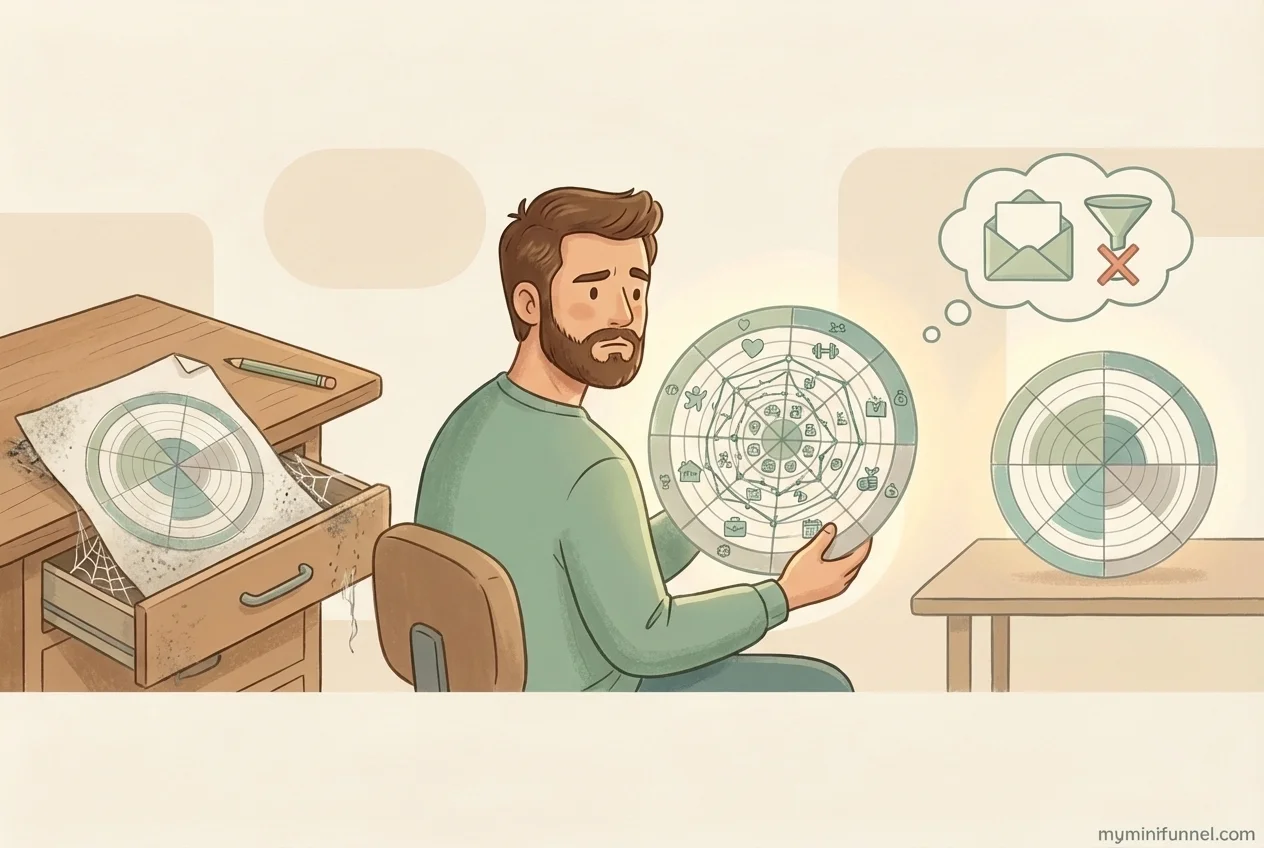
The wheel of life coaching tool is most powerful for progress tracking. Do an initial assessment, then repeat it every 90 days. Comparing wheels over time shows clients (and you) that coaching is working.
Not Customizing Categories
Generic categories work for general life coaching, but they’re not ideal for every niche. A nutrition coach using standard categories misses the opportunity to dig deeper into health-related areas. Take 10 minutes to customize.
Treating Scores as Absolute Truth
A “5” in Relationships from one client means something completely different than a “5” from another. The numbers are starting points for conversation, not diagnoses. Always explore what the score means to that specific person.
Missing the Lead Generation Opportunity
This is the biggest mistake. Coaches treat the Wheel of Life as purely a session tool when a wheel of life quiz could be working for them 24/7 online. If you’re only using paper wheels in sessions, you’re leaving leads on the table.
Making It Too Complicated
Some coaches add 15 categories, create elaborate scoring systems, or turn a simple exercise into a complex assessment. Keep it simple. Eight categories, 1-10 scale, quick visual result. Complexity kills completion rates.
Getting Started with Your Wheel of Life Assessment
The life balance wheel has been a coaching staple for over 60 years because it works. It helps clients see their life clearly, identify priorities, and track progress over time.
But in 2025, the Wheel of Life can do so much more. Used as an interactive lead magnet, it can become your most effective tool for turning social media followers into email subscribers and email subscribers into coaching clients.
Here’s your action plan:
- For your coaching sessions: Use the wheel at intake and every 90 days. Compare results over time to show progress.
- For lead generation: Set up an interactive Wheel of Life on your website or Instagram bio. Let it capture leads while you focus on coaching.
- For follow-up: Personalize your email sequences based on wheel results. Someone with low Health scores gets different content than someone struggling with Relationships.
Ready to create your own Wheel of Life lead magnet? Start with our free template. It takes about 10 minutes to set up, integrates with your email tools, and starts capturing qualified leads immediately.
You became a coach to help people transform their lives. The Wheel of Life can help you reach more of them.

Lesly Garreau
Product builder, marketing strategist, men's coach
Co-founder of My Mini Funnel. Helping coaches and creators turn followers into clients with simple lead capture tools.