You got certified. You’re passionate about helping people transform their lives. But here’s the problem: your inbox is empty, and you’re starting to wonder if anyone will ever actually pay you to coach them.
If you’re a new life coach, nutritionist, or personal trainer trying to figure out how to get your first leads as a coach, you’re not alone. Most coaches are brilliant at what they do but struggle with the marketing side. And that’s okay. You didn’t become a coach to learn complicated marketing software.
Here’s the good news: getting your first coaching clients doesn’t require thousands of followers, a fancy website, or an expensive marketing budget. It requires conversations, consistency, and a simple way to capture contact information from people who are interested in what you offer.
In this guide, we’ll walk through seven proven strategies that actually work for complete beginners. No overwhelming lists of 30 tactics. No assumptions that you already have an email list. Just practical, actionable steps you can start today.
We built My Mini Funnel because we’ve been exactly where you are. Yana is a nutritionist and personal trainer. Lesly is a psychotherapist and life coach. We know the struggle of being great at coaching but feeling lost when it comes to finding clients.
Let’s fix that.

Why Getting Your First Coaching Clients Feels So Hard
Before diving into tactics, let’s acknowledge something: the gap between “I’m a certified coach” and “I have paying clients” can feel enormous.
You might be dealing with imposter syndrome, wondering why anyone would pay you when there are thousands of other coaches out there. You might have tried setting up a ClickFunnels account only to close it 20 minutes later because it felt like learning a new language. Or maybe you’ve been posting on Instagram for months with plenty of likes but zero actual inquiries.
Here’s a statistic that might help: according to Forrester Research, only 5% of leads are sales-ready when first generated. That means 95% of people who might become clients need multiple touchpoints before they’re ready to commit.
This isn’t a failure of your marketing. It’s just how human decision-making works.
The real problem most new coaches face isn’t that they’re bad at marketing. It’s that they’re trying to do everything at once, getting overwhelmed by all the advice out there, and giving up before any single strategy has time to work.
Let’s simplify this.
The Only 3 Things You Need to Get Your First Leads
Before we get into specific strategies, here’s the framework that makes everything else work:
1. Something valuable to offer. This is your expertise, packaged in a way that helps someone take one step forward. It could be a free discovery session, a quiz that helps them understand their situation, or a simple checklist.
2. A way to capture contact information. Social media followers aren’t leads. You can’t email them, and the algorithm can change tomorrow. An email address means you can reach someone directly, anytime.
3. A place to be visible. You need to show up somewhere your ideal clients already spend time. This could be Instagram, LinkedIn, local networking events, or someone else’s podcast.
That’s it. Every strategy below is just a different way of combining these three elements.

Strategy 1: Start With People Who Already Know You
Your first client is probably not going to be a stranger who finds you through a Google search. Your first client is most likely someone who already knows, likes, and trusts you.
Why Your Network is Your Fastest Path to First Clients
Word-of-mouth remains the most powerful form of marketing. People trust recommendations from friends and colleagues more than any advertisement, website, or social media post.
Research consistently shows that referrals convert at higher rates and cost less to acquire than any other lead source. For new coaches without an established online presence, this is your biggest advantage.
Your network includes:
- Friends and family
- Former colleagues
- People you went to school with
- Members of groups or communities you belong to
- Anyone who’s seen your social media posts
How to Reach Out Without Being Salesy
Here’s a template that works:
“Hey [name], I wanted to share some news. I’ve started my coaching business, specializing in helping [specific person] achieve [specific outcome]. I’m not asking you to sign up. I’m just wondering: do you know anyone who might benefit from this kind of support?”
Notice what this message does. It doesn’t ask for a sale. It asks for a referral. This feels much less awkward, and it works because people genuinely want to help their friends succeed.
The 30-Conversation Challenge
One of the most effective ways to get your first clients is simple: have 30 genuine conversations about what you do.
Reach out to people in your network and offer a free 20-minute mini-session. No pitch, no pressure. Just a conversation where you help them with one specific thing.
The purpose isn’t to convert everyone into a paying client. The purpose is to:
- Practice your coaching skills
- Get testimonials (with permission)
- Generate referrals
- Build confidence
Some of these conversations will turn into clients. Most won’t. But the ones that don’t will know someone who needs what you offer.
Strategy 2: Offer Free Discovery Sessions (The Right Way)
Free coaching sessions are one of the most effective tools for new coaches, but only if you structure them correctly.
Why Free Sessions Work for New Coaches
When someone experiences your coaching firsthand, trust builds faster than any amount of content could achieve. A study from Demand Gen Report found that leads who are nurtured convert 20% more often than leads who aren’t.
A discovery session is nurturing in its most concentrated form.
For new coaches, free sessions also solve the testimonial problem. You need social proof to attract clients, but you need clients to get social proof. Free sessions break this cycle.
Structure Your Free Session for Success
Keep it to 20-30 minutes maximum. Any longer and you’re giving away too much, which creates a dynamic where they feel they don’t need to pay for more.
Focus on ONE specific problem. Don’t try to solve their entire life in 20 minutes. Help them get one breakthrough, one insight, one small win.
End with a clear next step. This doesn’t mean a hard sell. It means saying something like: “Based on what we’ve talked about, I think you’d benefit from [specific thing]. Would you like to hear about how we could work together on that?”
Common Mistakes to Avoid
Giving away too much. Your free session should be valuable, but it should also leave them wanting more. Think of it as a movie trailer, not the whole film.
No clear boundary. If your “free 20 minutes” turns into an hour, you’re training clients that your time isn’t valuable.
Treating it like a full coaching session. A discovery session is about understanding their problem and showing you can help. It’s not a complete transformation.

Strategy 3: Choose ONE Social Platform and Show Up Consistently
Here’s where most new coaches go wrong: they try to be everywhere. Instagram, LinkedIn, TikTok, YouTube, Facebook groups, Pinterest. They post sporadically on all of them and wonder why nothing works.
Why Consistency Beats Complexity
Marketing research consistently shows it takes 7-10 touchpoints before someone is ready to buy. For coaching, where trust is essential, it often takes even more.
This means showing up once a week on five platforms is far less effective than showing up daily on one platform.
Consistency is a visibility cheat code. When people see you repeatedly sharing valuable insights, you stay top of mind. When they’re finally ready for help, you’re the first person they think of.
Which Platform Should You Choose?
Instagram works well for health, fitness, nutrition, and wellness coaches. It’s visual, which suits transformation-focused content. The Stories feature creates regular touchpoints.
LinkedIn works well for business, career, and executive coaches. The audience is already in a professional mindset, and the platform rewards thoughtful long-form content.
Facebook Groups work well for life coaches and community-focused niches. You can build genuine relationships through comments and conversations.
The best platform is the one where your ideal clients already spend time. If you’re a fitness coach for busy moms, they’re probably on Instagram. If you’re a leadership coach for executives, they’re on LinkedIn.
What to Post as a New Coach (Even Without Followers)
You don’t need thousands of followers to post valuable content. Here’s what works:
Share your own transformation story. Why did you become a coach? What challenges have you overcome? People connect with stories.
Educational tips. Share something useful that your ideal client can implement today. Keep it simple and specific.
Behind-the-scenes. Show what you’re learning, what you’re working on, the reality of building a coaching practice.
Questions that spark engagement. Ask your audience about their challenges. This gives you content ideas and starts conversations.
The goal isn’t to go viral. The goal is to be consistently helpful so that when someone needs coaching, you’re the obvious choice.
Strategy 4: Create a Simple Lead Magnet That Actually Converts
Social media followers are not leads. You can’t email them directly. If the platform changes its algorithm or shuts down your account, you lose access to everyone you’ve built a relationship with.
An email list is different. It’s yours. You can reach people directly, anytime.
What is a Lead Magnet?
A lead magnet is something valuable you offer in exchange for someone’s email address. It’s called a “lead magnet” because it attracts (like a magnet) potential clients (leads) to your email list.
The best lead magnets solve a specific problem and give people a quick win. They should be valuable enough that someone is happy to give you their email, but not so comprehensive that they feel they don’t need you anymore.
The Best Lead Magnets for New Coaches
Quizzes and assessments are the highest-converting lead magnets for coaches. According to recent data, interactive content like quizzes achieves 70% higher conversion rates than static content like PDFs.
Quiz ideas by niche:
- Life coaches: Wheel of Life Assessment or Stress Level Quiz
- Nutrition coaches: Nutrition Profile Quiz or “What’s Your Metabolic Type?”
- Fitness coaches: Fitness Assessment Quiz or “What’s Your Fitness Personality?”
- Business coaches: Coaching Assessment or “Leadership Style Assessment”
Calculators work exceptionally well for health and fitness coaches because they deliver personalized, numerical results that feel concrete and valuable:
- BMI Calculator
- Calorie and Macro Calculator
- BMR (Basal Metabolic Rate) Calculator
- Body Fat Percentage Estimator
Simple resources can also work well:
- Checklists (5-10 items maximum)
- Templates (meal plan template, goal-setting worksheet)
- Mini-guides (5-10 pages, focused on one specific topic)
Why Interactive Tools Beat PDFs
For a deeper look at specific lead magnet ideas, read our guide on lead magnets for life coaches or learn how fitness coaches use a BMI calculator as a lead magnet.
Here’s the data: interactive lead magnets convert significantly better than static content. A quiz doesn’t just capture an email. It engages someone for several minutes, delivers personalized results, and creates an immediate sense of “this person understands me.”
Interactive lead magnets also pre-qualify leads automatically. Based on someone’s answers, you know whether they’re a good fit for your services before you ever speak to them.
Tools like My Mini Funnel let you create interactive lead magnets and calculators in 10 minutes, designed specifically for coaches. No coding, no design skills required. You pick a template, customize the questions and colors, and publish. If you want to compare your options, see our roundup of the 8 best lead capture tools for coaches.
The key is offering immediate value. When someone completes your quiz and sees personalized results on the screen, trust builds instantly.
Strategy 5: Get in Front of Other People’s Audiences
Building your own audience from zero takes time. A faster approach is to appear where your ideal clients already gather.
Guest on Podcasts (Even Small Ones)
There are over 546 million podcast listeners worldwide, and that number grows every year. But you don’t need to appear on top-ranked shows to get results.
Smaller podcasts often have more engaged audiences. The host knows their listeners personally. A recommendation from them carries significant weight.
How to pitch yourself as a new coach:
- Focus on your unique story or perspective
- Offer to share specific, actionable tips (not just talk about coaching generally)
- Make it easy for the host by suggesting topics and providing questions
- Use platforms like Matchmaker.fm to find relevant shows
Collaborate with Complementary Professionals
Think about who else serves your ideal clients:
- Nutritionists + personal trainers: Different expertise, same audience
- Therapists + life coaches: Clients often benefit from both
- Yoga instructors + wellness coaches: Natural overlap
- Business coaches + accountants: Business owners need both
Reach out to complementary professionals and propose:
- Exchange referrals
- Co-host a workshop
- Do a joint Instagram Live
- Create content together
This gives you access to their audience while providing value to theirs.
Join and Contribute to Online Communities
Facebook groups, LinkedIn groups, Reddit communities, and forums where your ideal clients ask questions are goldmines for new coaches.
The key is genuine contribution, not self-promotion. Answer questions helpfully. Share insights without expecting anything in return. Be the person who consistently shows up with useful information.
Over time, people notice. They click your profile. They follow you. They reach out when they need help.
Strategy 6: Host a Free Workshop or Challenge
Workshops and challenges give potential clients a taste of working with you before they commit to anything.
Why Workshops Convert Better Than Posts
According to multiple studies, webinars achieve conversion rates around 70% for email opt-ins. That’s dramatically higher than most other lead generation methods. You can repurpose your best workshop recordings using a video funnel to keep capturing leads long after the live event ends.
The reason is trust. When someone watches you teach for 30-60 minutes, they get a sense of your personality, your expertise, and your coaching style. They can decide if you’re someone they’d want to work with.
For new coaches, workshops also provide a low-pressure way to demonstrate value without asking for money upfront.
Simple Workshop Ideas for New Coaches
- “5-Day Stress Reset Challenge” (life coaches)
- “Meal Prep 101 for Busy Professionals” (nutrition coaches)
- “Find Your Fitness Starting Point” (personal trainers)
- “Life Balance Assessment Workshop” (wellness coaches)
- “Goal-Setting for the New Year” (any niche)
Keep your first workshop small. 10-15 participants is perfect. This lets you interact personally with everyone and creates intimacy that larger events can’t match.
How to Fill Your First Workshop
- Invite your network personally (email and direct messages work better than public posts)
- Partner with a local business or complementary professional
- Promote heavily on your ONE social platform
- Ask previous free session clients to invite friends
Don’t wait until you have a huge following. A workshop with 8 engaged participants is more valuable than one with 50 passive attendees.
Strategy 7: Ask for Referrals (Yes, Even With Zero Clients)
Referrals are the highest-quality leads you’ll ever get. When someone is recommended by a friend, they come in already trusting you.
Why Referrals Work So Well
People trust personal recommendations more than any other form of marketing. A referral comes with built-in credibility because someone they trust has vouched for you.
Referrals also tend to be better-fit clients. The person referring understands both you and their friend, so they only make introductions when there’s genuine alignment.
How to Ask for Referrals When You’re New
After free sessions or casual conversations about your coaching:
“Thanks so much for this conversation. Do you know anyone else who might be dealing with similar challenges? I’d love to help more people like you.”
To your broader network:
“I’m looking for [specific type of person, like ‘busy professionals who want to get healthier’]. If you know anyone who fits that description and might benefit from coaching, I’d appreciate the introduction.”
Some coaches offer referral incentives like a 10% commission or a discount on future sessions. This can work, but genuine relationships usually generate more referrals than financial incentives.
What to Avoid as a New Coach (Common Mistakes)

Mistake 1: Trying to Do Everything at Once
The biggest trap for new coaches is reading a blog post with 30 lead generation strategies and trying to implement all of them.
Pick 2-3 strategies from this guide. Focus on them for at least three months before adding anything new.
Mistake 2: Waiting Until Everything is Perfect
Your website doesn’t need to be finished. Your lead magnet doesn’t need to be perfect. Your social media doesn’t need a cohesive aesthetic.
Perfectionism is procrastination in disguise. Done is better than perfect.
Mistake 3: Only Posting on Social Media Without a System
Likes and comments are not clients. If you’re posting content but have no way to capture email addresses, you’re building on rented land.
Every piece of content should have a path to your email list, whether that’s a quiz in your bio, a free resource you mention in posts, or a direct invitation to book a call.
Mistake 4: Underpricing Your Services
New coaches often think, “If I charge less, more people will sign up.” The opposite is usually true.
Low prices signal low value. The clients you want, the ones who are committed to change, aren’t looking for the cheapest option. They’re looking for someone who can actually help them. If you’re unsure what to charge, try our free coaching revenue calculator to see how your pricing, traffic, and conversion rate affect your monthly income.
Mistake 5: Treating Coaching Like a Hobby
Marketing isn’t an optional add-on to your coaching business. It’s part of the job. If you want to help more people, you need to consistently put yourself out there.
This doesn’t mean you need to spend hours every day on marketing. It means showing up consistently, even when you don’t feel like it.
Your 30-Day Action Plan to Get Your First Leads
Here’s a simple roadmap to get started:
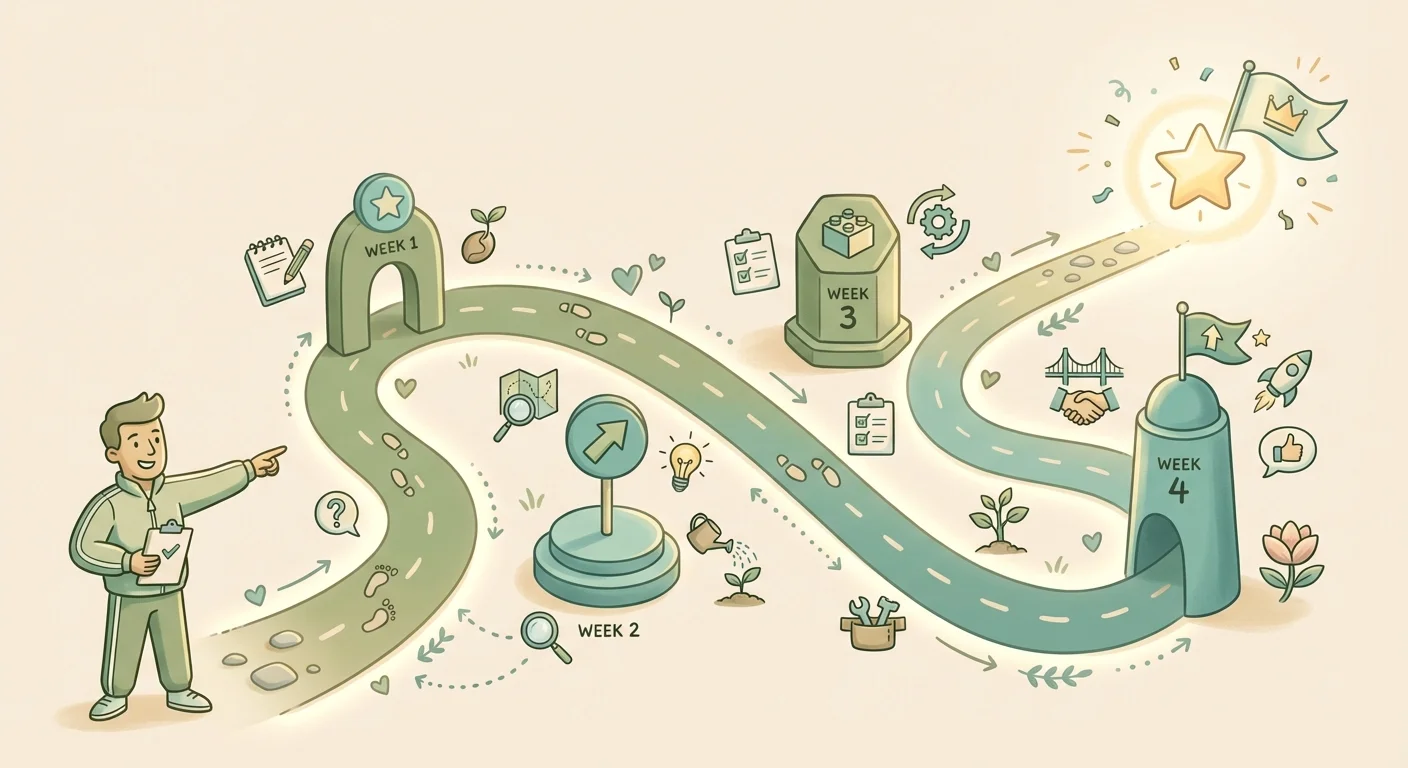
Week 1: Foundation
- Define your niche clearly (who specifically do you help, and what specific outcome do you help them achieve?)
- Reach out to 10 people in your network using the template above
- Choose ONE social platform and commit to it
Week 2: Visibility
- Start posting daily on your chosen platform
- Offer 5 free discovery sessions to people in your network
- Create a simple lead magnet (a quiz works great here)
Week 3: Expansion
- Reach out to 3 podcasts or potential collaboration partners
- Ask every free session participant for a testimonial
- Continue daily social posting
Week 4: Systems
- Set up your email list (Mailchimp, Mailerlite, and ConvertKit all have free tiers)
- Create a simple welcome sequence for new subscribers
- Ask every person you talk to for referrals
Your First Client is Closer Than You Think
Getting your first leads as a new coach doesn’t require a massive following, a perfect website, or expensive marketing tools. It requires showing up consistently, having genuine conversations, and making it easy for interested people to give you their email address.
Start with your network. They already trust you. Offer free sessions to build testimonials and confidence. Pick one platform and show up daily. Create a simple lead magnet that delivers immediate value.
The coaching industry is growing rapidly, with the global market now valued at over $7 billion. There’s room for you. There are people who need exactly what you offer.
Your first client is probably closer than you think. They might be someone you already know, a friend of a friend, or someone who’s been watching your content and just needs a clear invitation.
Ready to start capturing leads from your social following? My Mini Funnel helps coaches create interactive lead magnets and calculators in 10 minutes, no tech skills required. It’s built by coaches, for coaches. Start free and see how simple lead generation can be.

Lesly Garreau
Product builder, marketing strategist, men's coach
Co-founder of My Mini Funnel. Helping coaches and creators turn followers into clients with simple lead capture tools.