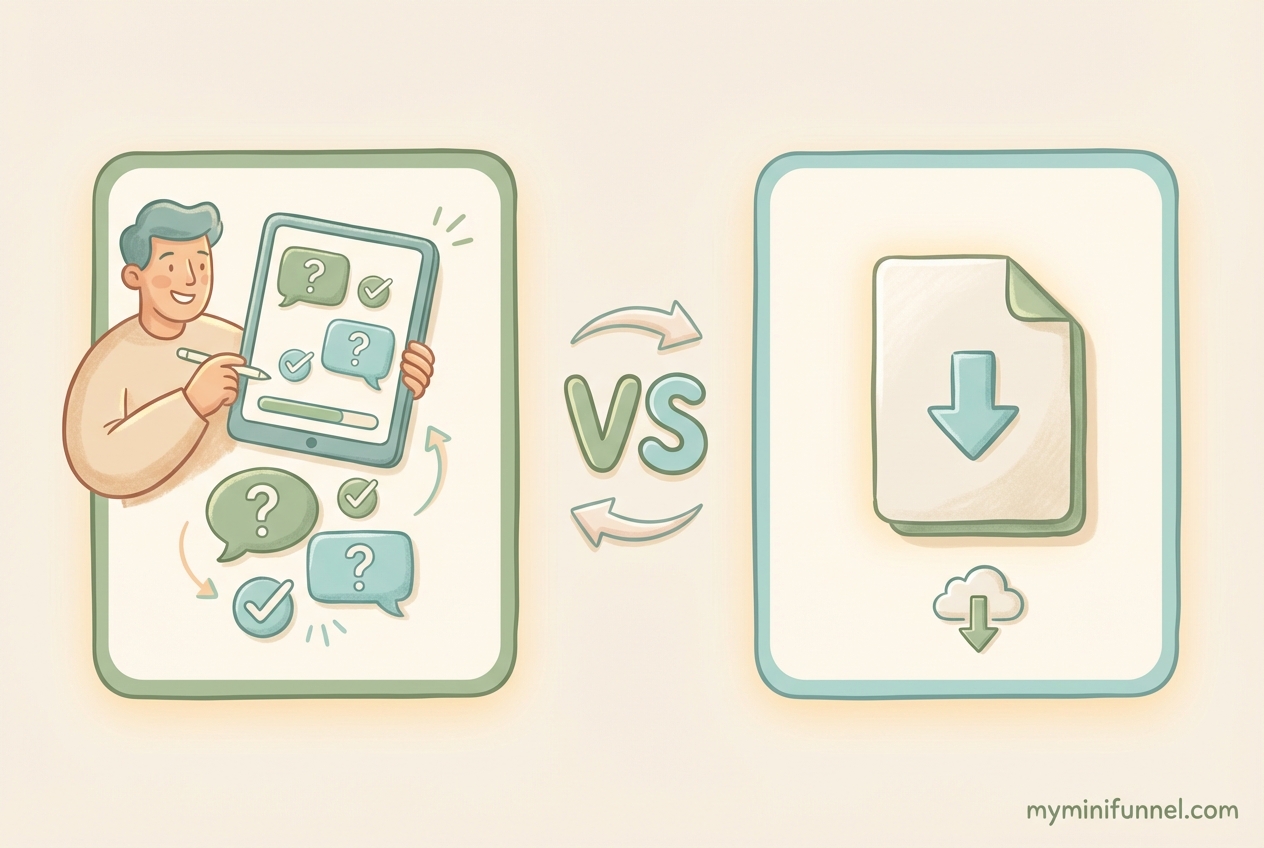
There are now 122,974 active coaches worldwide, according to the ICF Global Coaching Study. That number grew 15% in just two years. So if you’re wondering how to get coaching clients, you’re not alone. You’re competing with tens of thousands of other coaches for the same attention.
But attention isn’t the problem. Most coaches already have some visibility. They post on Instagram, show up in Facebook groups, maybe even have a website. The real issue is what happens after someone finds you. You get a follow, a like, maybe a save. And then the algorithm buries your next post and that potential client never sees you again.
The difference between coaches who struggle and coaches who stay fully booked comes down to one word: capture. Do you have a system that turns casual interest into an actual email address you can reach anytime?
This guide covers seven strategies to get coaching clients, starting with the one tactic that almost every other guide skips entirely.
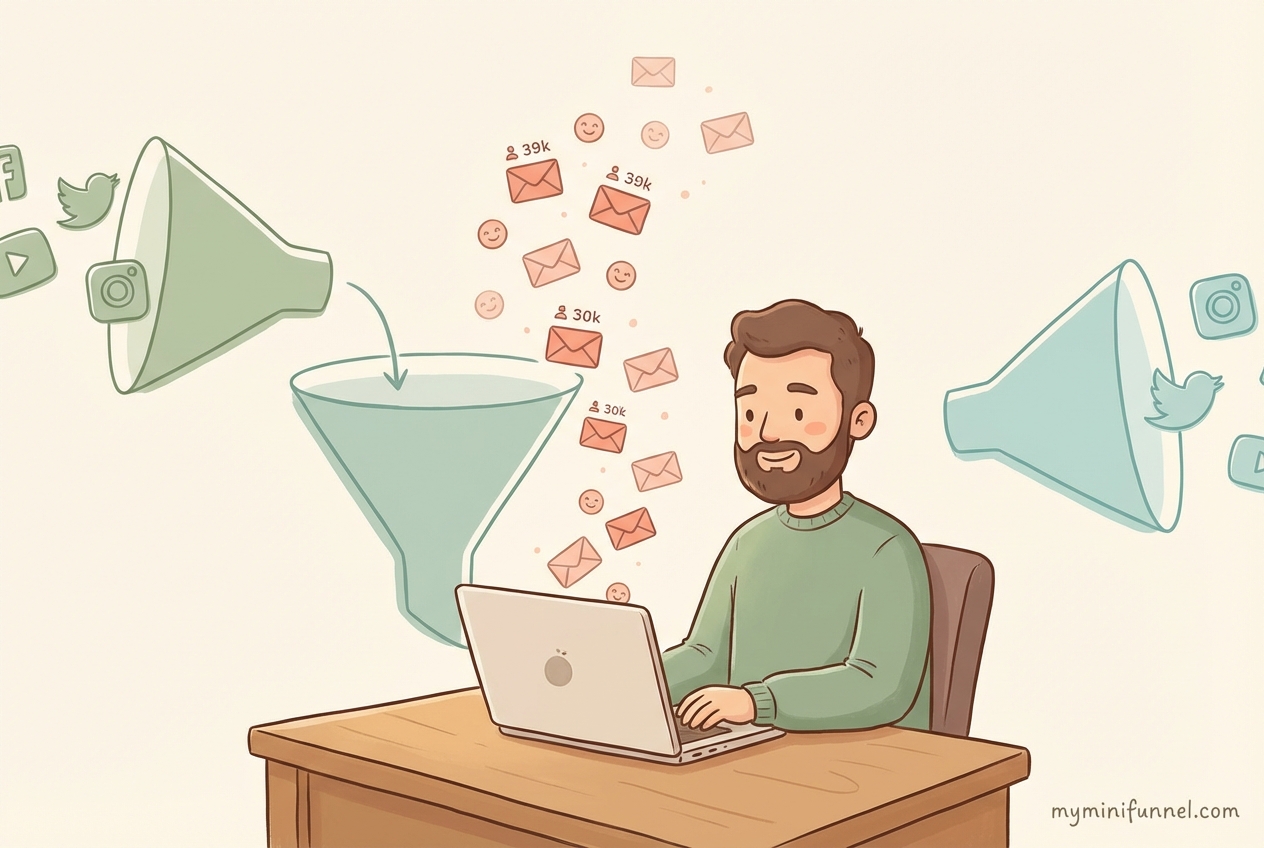
Why Most Coaches Struggle to Get Clients
Before we get into the strategies, let’s talk about why this feels so hard.
The coaching industry hit $5.34 billion in revenue in 2025. The market is booming. People want coaches. Companies hire them. Individuals pay for them. The average session fee in North America is $234 per hour.
So demand exists. The problem isn’t a lack of people who need coaching. The problem is that most coaches are stuck in what I call the “visibility trap.” They spend all their energy getting attention but have no system for converting that attention into something they can follow up on.
Here’s what the visibility trap looks like:
- You post consistently on Instagram but your DMs stay quiet
- People engage with your content but never book a call
- You get website traffic but have no idea who visited
- You attend networking events but leave with only business cards that go nowhere
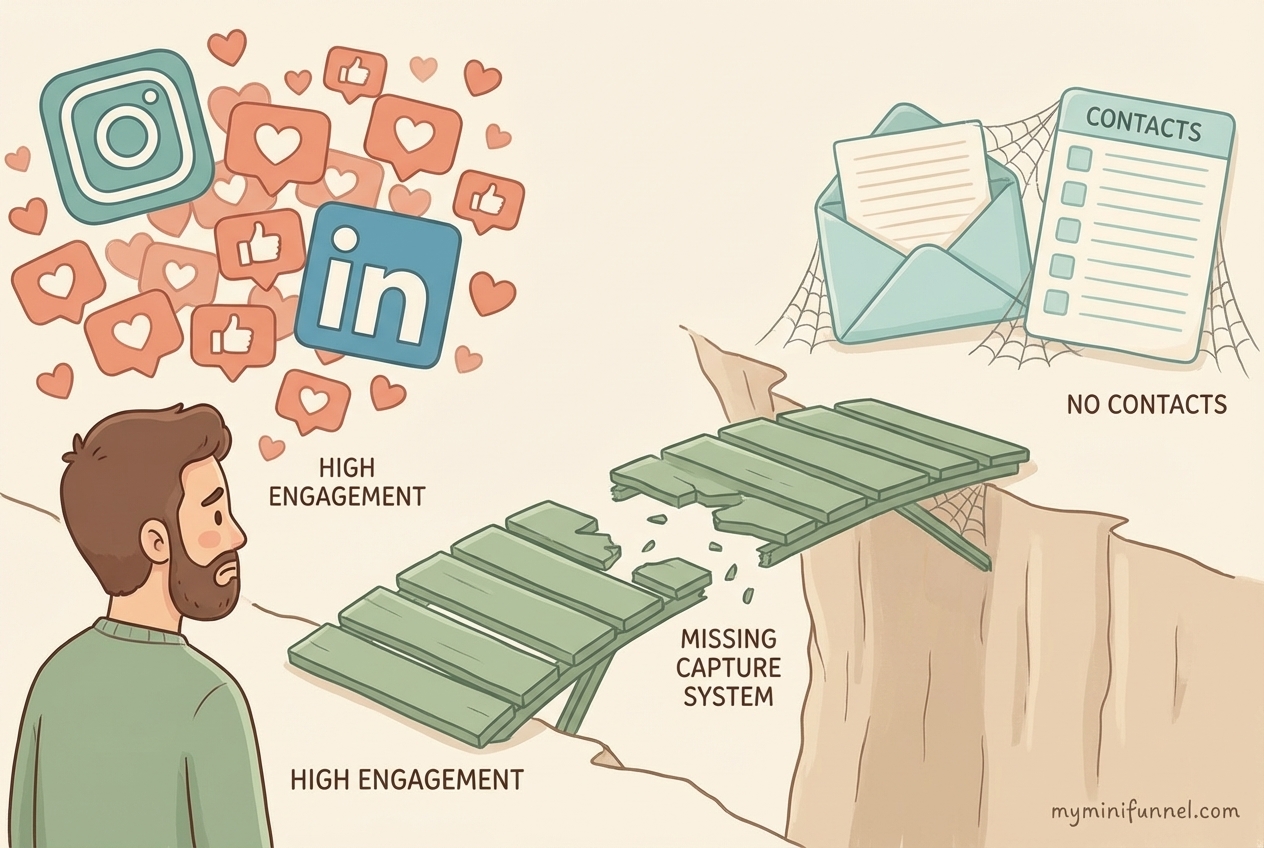
The missing piece is a capture system. Something that sits between “someone noticed you” and “someone became a client.” Without it, every piece of content you create, every event you attend, every social media post you publish is a one-shot opportunity that expires the moment someone scrolls past.
Let’s fix that.
1. Build a Lead Capture System (The Step Everyone Skips)
This is the foundation everything else builds on. If you want to know how to get coaching clients consistently, start here. Before you spend another hour creating content or networking, set up a way to capture contact information from people who show interest in your work.
Why Email Beats Social Media Every Time
Your Instagram followers are not yours. Neither are your LinkedIn connections. If the platform changes its algorithm tomorrow (and it will), you lose access to those people. You have zero control.
Email is different. When someone gives you their email address, you own that relationship. No algorithm sits between you and your potential client. According to the Data & Marketing Association, email marketing generates $44 for every $1 spent. That’s a 4,400% return. No social media platform comes close.
But here’s where most guides fall short. They say “build an email list” and leave it at that. Nobody explains how. What do you offer in exchange for an email? What converts? What doesn’t?
Create an Interactive Lead Magnet
Not all lead magnets are equal. A PDF guide might convert 3-10% of people who see your opt-in page. An interactive quiz or assessment converts at 30-50%. That’s a 3-5x difference in conversion rates.
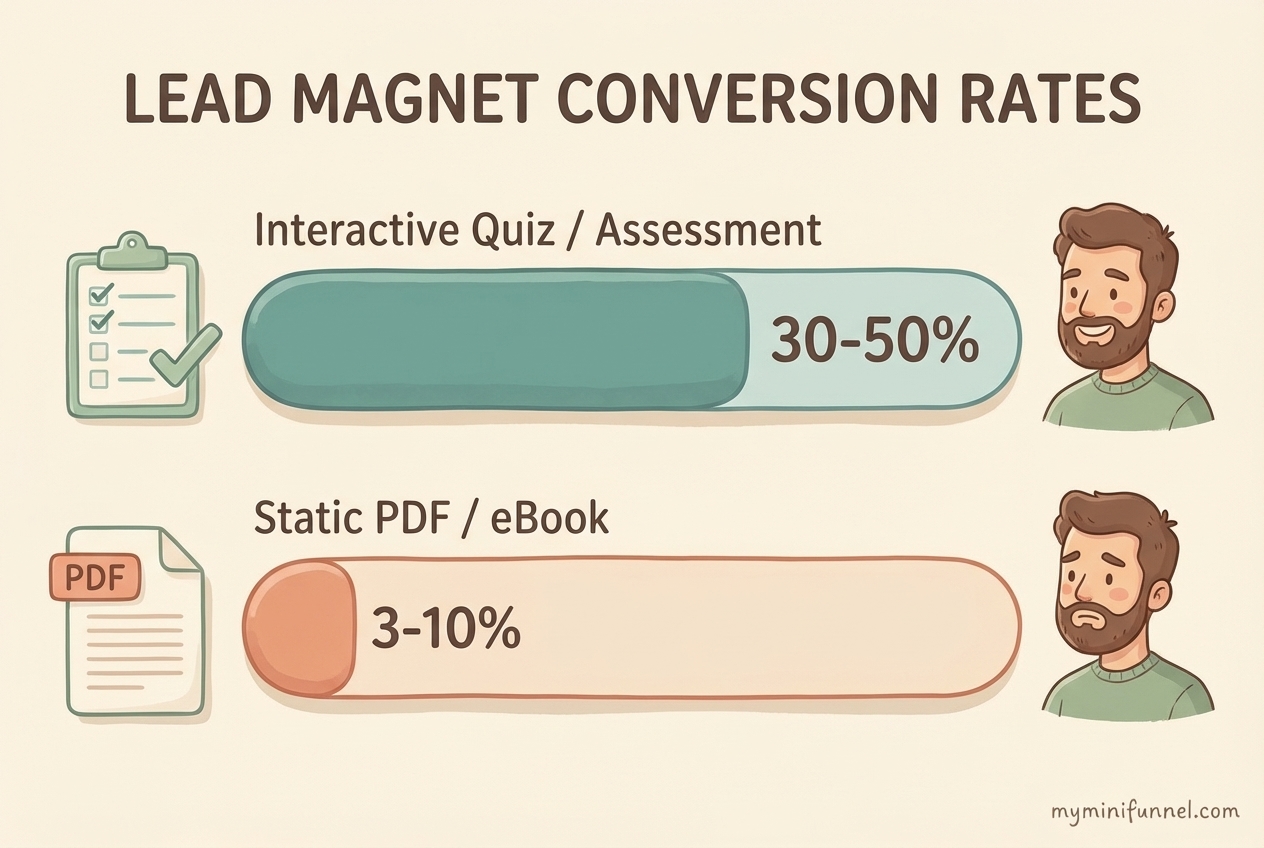
Why do interactive tools work so much better? Because they give people something they actually want: personalized results. Nobody downloads a PDF thinking “I can’t wait to read 15 pages of general advice.” But everyone wants to know their Wheel of Life score, their stress level, or their coaching readiness.
Here’s what to do:
Pick a tool that matches your niche:
- Life coaches: Wheel of Life Assessment or Limiting Beliefs quiz
- Fitness coaches: BMI Calculator or Fitness Assessment Quiz
- Nutrition coaches: Calorie & Macro Calculator or Diet Type Quiz
- Business coaches: Coaching Assessment or Big 5 Personality Test
Set it up in minutes. The right coaching tools handle the technical side so you can focus on what you do best. My Mini Funnel gives you pre-built templates designed for coaches. Pick a template, customize it with your brand colors, and publish. The whole process takes about 10 minutes.
Connect it to your email tool. Make sure leads automatically flow into your email system (Mailchimp, ConvertKit, or Mailerlite) so you can follow up without manual work.
Put it everywhere. Your link in bio, your website, your email signature, your business cards. Every touchpoint should point to your lead capture tool.
This single step puts you ahead of 90% of coaches who are still relying on “DM me for info” as their only conversion path. For a deeper look at how interactive lead capture works, see our complete guide to lead capture for coaches.
2. Define Your Niche So Clients Find You
“I help people live better lives” sounds nice. But it doesn’t help anyone find you. When a stressed-out working mom searches Google at midnight for help, she’s not typing “coach who helps people live better lives.” She’s typing “how to stop feeling overwhelmed as a working parent.”
The more specific your niche, the easier clients find you.
Pick a problem, not a demographic. “I coach women” is a demographic. “I help women in corporate leadership handle burnout without quitting their jobs” is a problem. People search for solutions to problems, not for demographics.
If you’re wondering how to get life coaching clients, the answer starts with getting specific about who you help.
Examples by coach type:
- Life coach: “I help divorced dads rebuild confidence and create a parenting plan that works”
- Health coach: “I help busy professionals lose 20+ pounds without meal prepping or gym memberships”
- Business coach: “I help solopreneurs hit their first $10K month with organic marketing”
When you get specific, your content gets easier to create because you know exactly who you’re talking to. Your SEO improves because you rank for specific long-tail searches. And the right people recognize themselves in your message, which means they’re more likely to reach out.
3. Turn Your Content Into a Client Pipeline
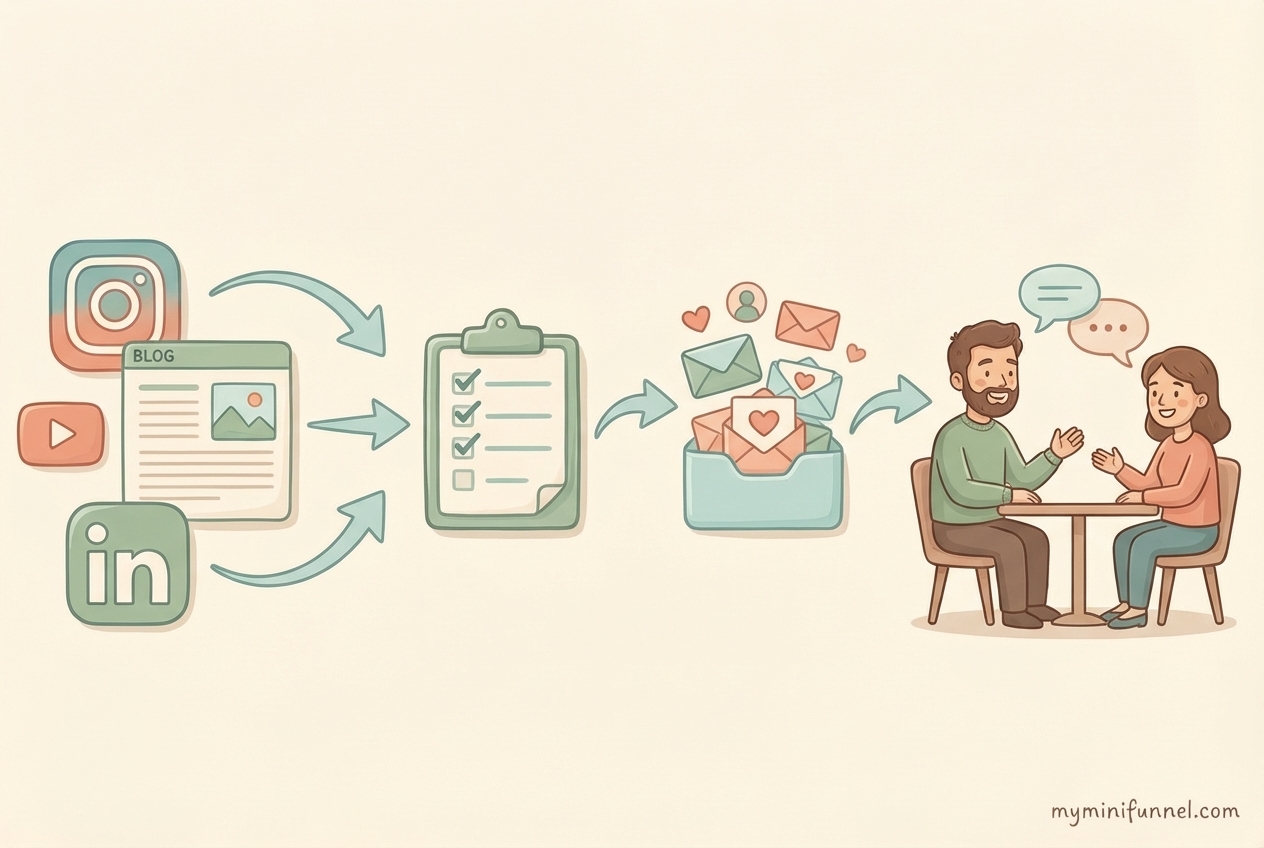
Content marketing works for coaches. But only if your content has a destination. Every piece of content you create should move someone closer to your lead capture system.
Blog Posts That Rank and Attract
If you’re wondering how to get coaching clients online, blogging is one of the most reliable long-term strategies. A well-written blog post can bring you traffic for years after you publish it.
Write about the questions your ideal clients ask. Use tools like Google’s “People Also Ask” to find real questions. For example, if you’re a life coach, you might write about:
- “How do I know if I need a life coach?”
- “What’s the difference between therapy and coaching?”
- “How to set goals that actually stick”
Each post answers a real question, builds trust with your reader, and ends with an invitation to take your quiz or assessment. That’s how content becomes a pipeline, not just noise. These are simple life coach marketing strategies that build trust before someone ever books a call.
Social Media That Converts
Social media should funnel people toward your lead capture tool. Here’s a simple framework:
Instagram: Share a tip in a Reel or carousel. In the caption, mention your free quiz/assessment. Direct people to the link in your bio. If you want to go deeper, check out our guide on building an Instagram quiz funnel for coaches.
LinkedIn: Write a post about a client win (anonymized) or a lesson from your coaching practice. End with: “I created a free [assessment name] for people who want to check where they stand. Link in comments.”
The key: Stop treating social media as the destination. It’s the invitation. Your lead capture tool is the destination.
4. Get Coaching Clients Through Speaking and Networking
Speaking builds authority faster than any other strategy. When you stand in front of a room (or a Zoom call) and help people with a real problem, you skip the “know, like, trust” timeline. People experience your coaching in real time.
Where to speak:
- Local business events and chambers of commerce
- Online summits (there are dozens in the coaching space)
- Podcast interviews (start with smaller shows, pitch larger ones as you build confidence)
- Industry meetups and Toastmasters groups
- Wellness fairs and community events
The key mistake most coaches make: they end their talk with “here’s my website” or hand out business cards. Business cards end up in desk drawers. Websites get visited once and forgotten.
Instead, end every talk with your lead capture tool. “If you want to find out your [assessment result], scan this QR code. It takes two minutes and you’ll get your results right away.” That one change turns a 30-minute talk into 15, 25, or 50 new email subscribers you can follow up with.
5. Use Referrals and Testimonials as Your Sales Team
Referrals are the most reliable source of coaching clients, according to the ICF. The challenge is that most coaches wait passively for referrals instead of building a system around them.
Ask at the right moment. The best time to ask for a referral is right after a client has a breakthrough or hits a milestone. They’re energized and grateful. “Do you know anyone else who might benefit from this kind of work?” feels natural in that moment.
Make it easy. Don’t ask clients to “spread the word.” Give them something specific to share. “Here’s a link to my free coaching assessment. If you know someone who’d find it helpful, send it their way.” This works because you’re not asking them to sell you. You’re giving them a valuable resource to share.
Collect video testimonials. Written testimonials are fine. Video testimonials are 10x more powerful. After a client achieves a result, ask: “Would you be open to recording a quick 60-second video about your experience?” Most happy clients say yes. Use these on your website, in social posts, and on your lead capture page.
Build a simple case study format:
- Where the client started (the problem)
- What you worked on together (the process)
- Where they are now (the result)
- A quote in their own words
Three to five case studies on your website do more to build trust than a hundred social media posts.
6. Offer Free Sessions That Lead to Paid Clients
Free coaching sessions get a bad reputation, but they work when you do them right. The mistake is giving away unlimited free coaching with no structure. The right approach is using free sessions as a qualification tool.
The beta testing approach (best for new coaches):
If you’re just starting out and wondering how to get your first clients as a coach, offer five people in your network a free 3-session coaching package. In exchange, ask for honest feedback and a testimonial. This gets you practice, proof, and potential paying clients all at once. For more on this approach, see our guide on getting your first leads as a new coach.
Discovery calls (for established coaches):
A discovery call isn’t a free session. It’s a conversation where you both decide if working together makes sense. Keep it to 20-30 minutes. Ask about their current situation, their goal, and what’s standing in the way. Then explain how you’d work together and what it costs.
The biggest mistake coaches make on discovery calls is giving too much coaching away. If you solve their problem on the call, they don’t need to hire you. Focus on diagnosis, not treatment.
7. Show Up Where Other Coaches Don’t
Most coaches stick to Instagram and maybe LinkedIn. That means platforms like Reddit, Quora, and niche online communities are wide open.
Reddit, Quora, and Online Communities
Quora has over 300 million monthly visitors. Reddit has 500 million+ users across 3.5 million communities. These platforms are full of people asking questions your coaching can answer.
How to use them without being spammy:
- Search for questions related to your niche
- Write genuine, helpful answers (200-400 words)
- Include your relevant experience
- Add a simple mention of your free assessment or quiz at the end
- Never hard-sell or pitch directly
One detailed Quora answer can drive traffic to your lead capture page for months. The people who click are already thinking about the exact problem you solve. It’s one of the most overlooked ways to get coaching clients online.
Guest Posting and Digital PR
Write articles for websites your ideal clients read. If you’re a health coach, pitch wellness publications. If you’re a business coach, write for entrepreneurship blogs.
In your author bio, include a link to your lead magnet. “Jane Smith is a certified life coach who helps working parents create balance. Take her free Wheel of Life Assessment to see where you stand.”
One guest post on a well-trafficked site can bring in leads for years.
How to Get Coaching Clients at Every Stage
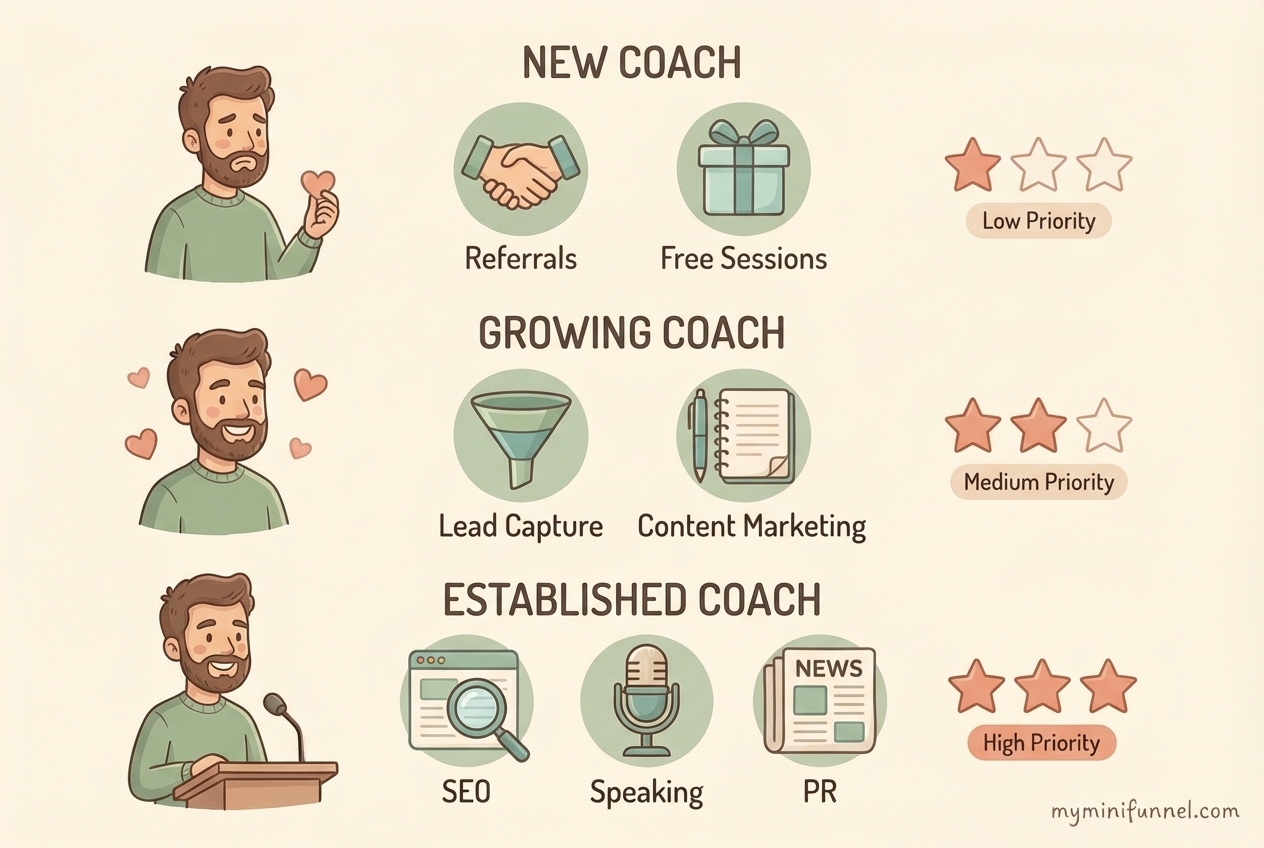
How to get clients as a coach depends on where you are. You don’t need all seven strategies at once. Pick the right ones for where you are right now.
| Your Stage | Start Here | Add Next | Long-Term Play |
|---|---|---|---|
| Brand new (0-3 clients) | Free sessions + referrals (strategies 5, 6) | Lead capture system (strategy 1) | Content marketing (strategy 3) |
| Growing (3-10 clients) | Lead capture system (strategy 1) | Content + social media (strategy 3) | Speaking + communities (strategies 4, 7) |
| Established (10+ clients) | Content pipeline + SEO (strategy 3) | Speaking and PR (strategies 4, 7) | Referral system (strategy 5) |
The one constant across all stages: build your lead capture system as early as possible. Even with just three clients, having a quiz or assessment on your website starts compounding your email list from day one.
Start with two strategies. Get consistent with them. Add a third when those two run smoothly. The coaches who try everything at once burn out before anything has time to work.
Your Next Step
The coaching market isn’t getting smaller. With over 122,000 active coaches worldwide and growing, standing out matters more each year. But the coaches who win aren’t necessarily the most visible ones. They’re the ones who capture the attention they do get.
Here’s what I’d do today: set up one lead capture tool. Pick a quiz or assessment that matches your coaching niche. Connect it to your email. Start sending every piece of content, every conversation, and every speaking opportunity toward that single capture point.
It takes 10 minutes to set up. That’s how to get coaching clients without burning out or chasing trends. From that point forward, every piece of visibility you earn has a place to land.
Browse coaching templates to find the right lead capture tool for your niche.

Lesly Garreau
Product builder, marketing strategist, men's coach
Co-founder of My Mini Funnel. Helping coaches and creators turn followers into clients with simple lead capture tools.