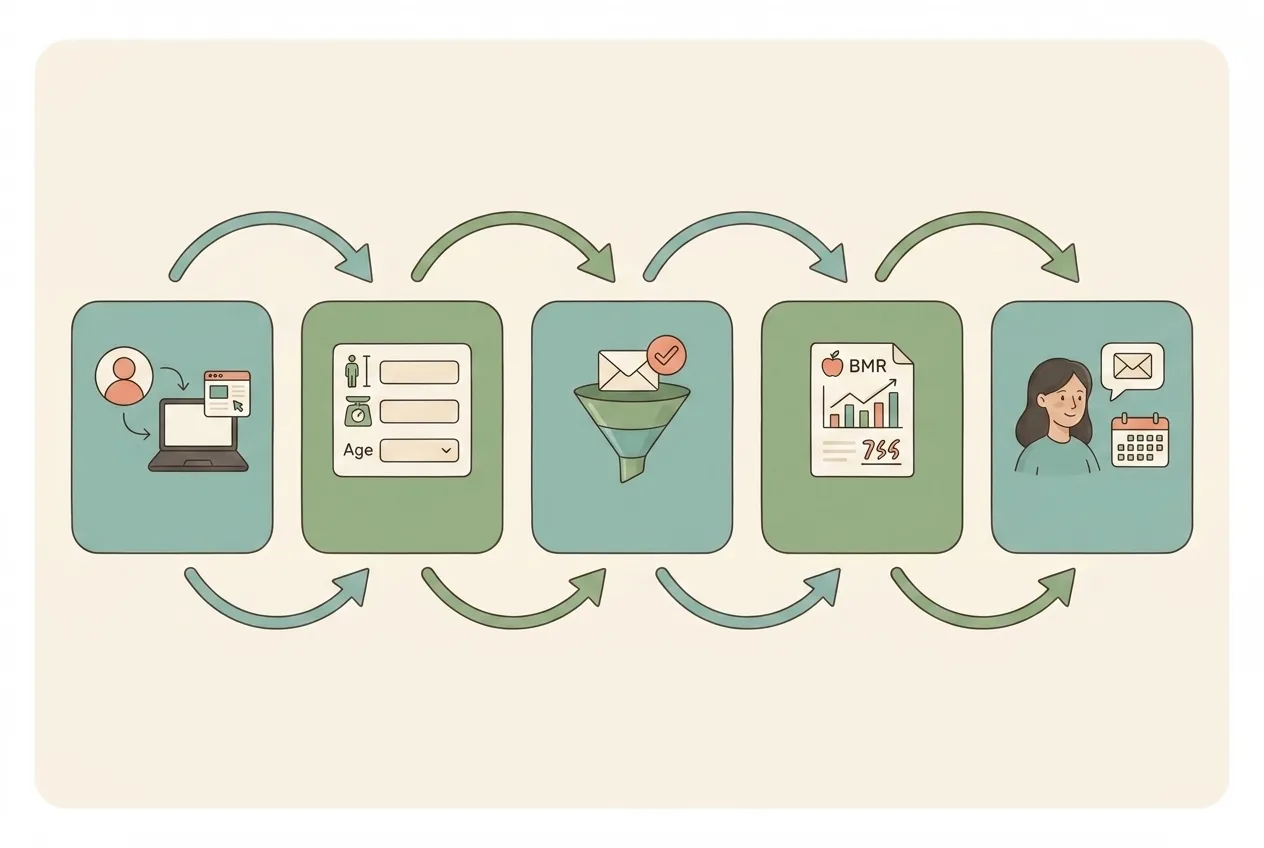
A BMR calculator for nutrition coaches helps potential clients understand their baseline calorie needs, then gives you a natural way to capture their email and start a more personal nutrition conversation. It works best when you position the result as a starting point, not a complete meal plan.
Most nutrition leads are not ready to book a consultation the first time they find you. They are usually asking a smaller question first: “How many calories does the body need?” “Why does energy crash in the afternoon?” “Could under-eating be part of the problem?” A BMR calculator answers that first question in under a minute, which makes it a practical lead magnet for coaches who want more than a generic PDF download.
In this guide, we will cover how to use a BMR calculator as a lead magnet, what to show on the results page, how to follow up without sounding salesy, and when to send someone to a calorie and macro calculator instead.

Key Takeaways
- A BMR calculator works well for nutrition coaches because it gives visitors a personalized number they can understand quickly.
- The result should explain what BMR means, what it does not mean, and why coaching can help turn that number into a real plan.
- The strongest BMR funnels segment leads by goal, activity level, and confidence, not just by the calculated result.
- A simple 3-email follow-up sequence can move someone from “interesting number” to “this needs a real plan.”
- BMR is the first step. A calorie and macro calculator or nutrition profile quiz is often the next best tool for warmer leads.
What Is a BMR Calculator Lead Magnet?
A BMR calculator lead magnet is an interactive tool that estimates a visitor’s Basal Metabolic Rate (BMR), then captures their email before showing personalized results. BMR is the estimated number of calories the body uses at rest for basic functions like breathing, circulation, and temperature regulation.
Most online BMR calculators use predictive equations, often based on the Mifflin-St Jeor equation for resting energy expenditure. The original equation was published in the American Journal of Clinical Nutrition and is available through PubMed. For coaching content, the important point is simple: the result is an estimate, not a diagnosis or a complete nutrition plan.
For a nutrition coach, the value is not the formula alone. Plenty of free BMR calculators exist online. The value is the context you add around the result.
Your calculator can explain:
- What their BMR means in plain English
- Why BMR is different from daily calorie needs
- How activity level changes the final calorie target
- Why under-eating can backfire for energy, training, and consistency
- What next step makes sense based on their goal
That last point matters most.
A generic calculator gives a number and ends the relationship. A coach-owned calculator gives the number, explains what to do with it, and invites the visitor into a more helpful conversation.
For example, someone might learn that their estimated BMR is 1,420 calories. If the results page simply says “Your BMR is 1,420,” they leave with a number. If the results page says, “This is your resting baseline, not your daily target. Based on your activity and goal, your actual needs are likely higher,” you have protected them from a common mistake and shown expertise at the same time.
That is the difference between a calculator and a lead capture tool.
Why BMR Works So Well for Nutrition Coaches
BMR works because it sits right at the intersection of curiosity, personalization, and practical next steps.
People may ignore a free PDF called “5 Nutrition Tips.” They have seen versions of that before. But “Find Your Daily Calorie Baseline” feels specific. It answers something about them, not just nutrition in general.
That personalization creates momentum.
Imagine Sarah, a health coach with a small Instagram following. She posts helpful content about balanced meals, protein, and energy crashes, but most people just like the post and move on. Then she adds a simple BMR calculator to her link in bio with the line: “Find your calorie baseline before starting another diet.”
A follower who has been quietly watching for months clicks. They enter age, height, weight, activity level, and goal. Now Sarah knows much more than “this person follows me.” She knows they are interested in nutrition, they have a body composition or energy goal, and they are open enough to give an email in exchange for personalized results.
That is a warmer lead than someone who downloaded a generic meal prep checklist.
A BMR calculator also helps nutrition coaches avoid the awkward “book a call with me” jump. Instead of asking for commitment immediately, you offer a useful first step. The visitor gets value now. You get permission to follow up.
That is a much better exchange.
Want the simple version of this setup? The BMR Calculator template in My Mini Funnel is built for this exact use case, so nutrition coaches can launch the calculator without building formulas from scratch.
BMR vs BMI vs Macro Calculators: Which One Should You Use?
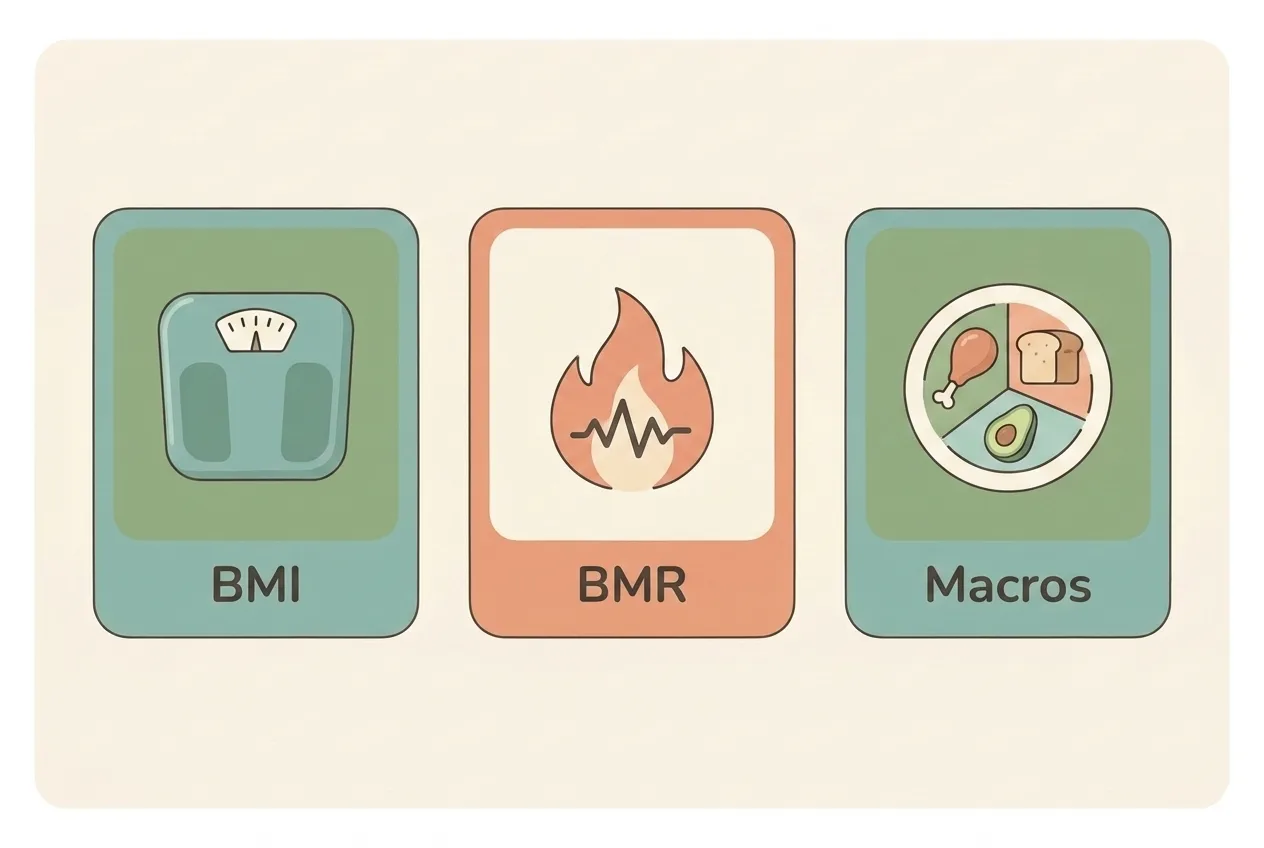
BMR, BMI, and macro calculators all attract health-conscious leads, but they do different jobs. Choosing the right one depends on the conversation you want to start.
| Calculator type | Best fit | Lead quality | Best next step |
|---|---|---|---|
| BMI calculator | Broad weight and body composition awareness | Early-stage health or fitness leads | Explain BMI limits and invite a broader assessment |
| BMR calculator | Nutrition education and calorie baseline clarity | Nutrition-curious leads with food, energy, or weight goals | Explain daily needs and invite goal-based follow-up |
| Calorie and macro calculator | Action-ready nutrition planning | Warmer leads who want targets | Offer coaching, meal planning, or accountability |
BMI calculator
A BMI calculator estimates Body Mass Index from height and weight. It is familiar, searchable, and easy for visitors to understand.
For many fitness coaches, BMI is a broad entry point. It starts a conversation about body composition, goals, and the limitations of one simple number. We covered that setup in our full BMI calculator lead magnet guide.
Use BMI when your audience is early in their health journey and asking general weight or body composition questions.
BMR calculator
A BMR calculator estimates resting calorie needs. It is more useful for nutrition coaching because it connects directly to food, energy, and meal planning.
Use BMR when your audience is asking questions like:
- “How many calories does the body need?”
- “Could under-eating be affecting energy?”
- “Why is weight loss not happening?”
- “How can food feel less like guessing?”
BMR gives you a more coaching-friendly opening than BMI because the next conversation is not “your category is X.” It is “let’s understand your baseline, then build from there.”
Calorie and macro calculator
A calorie and macro calculator goes further. It usually combines BMR, activity level, goals, and macro targets to show daily calories plus protein, carbs, and fats.
Use a calorie and macro calculator when your audience is already closer to action. They are not just curious about their metabolism. They want a plan.
Here is the simple decision:
- Use BMI for broad awareness
- Use BMR for nutrition education and baseline clarity
- Use macros for action-ready prospects who want targets
For nutrition coaches, BMR is often the best middle ground. It is specific enough to feel valuable, but not so detailed that the visitor feels they have everything they need without you.
What Your BMR Calculator Should Ask
A good BMR calculator should feel quick. If it starts to feel like a medical intake form, people drop off.
Keep the core questions simple:
- Age
- Sex or biological sex for formula accuracy
- Height
- Weight
- Activity level
- Primary goal
- Email address before results
The first four inputs power the BMR estimate. Activity level helps you explain the difference between BMR and total daily energy expenditure. Goal helps you tailor the result copy and follow-up sequence.
The email step should feel fair. The visitor has already done the work of entering their details, and the result is personal. A simple line like this works:
Enter your email and we will send your BMR result plus a quick guide to understanding what it means.
Avoid making the calculator feel like a trap. Don’t hide what they are getting. Don’t ask for a phone number unless you have a clear reason. Don’t ask 18 questions when seven will do.
If you want better segmentation, add one optional question:
What feels hardest right now?
- Knowing what to eat
- Eating enough protein
- Staying consistent
- Losing weight without feeling restricted
- Having energy through the day
That one question can shape your follow-up more effectively than another measurement field.
A nutrition coach who knows someone struggles with protein can send a different email than someone who struggles with consistency. That is where the calculator becomes useful beyond the first result.
What to Put on the Results Page
The results page is where most BMR calculators either build trust or accidentally create confusion.
A weak results page says:
Your BMR is 1,420 calories.
That is technically useful, but it leaves the visitor with questions. Is 1,420 what they should eat? Is it too low? Is it good or bad? Should they cut below that?
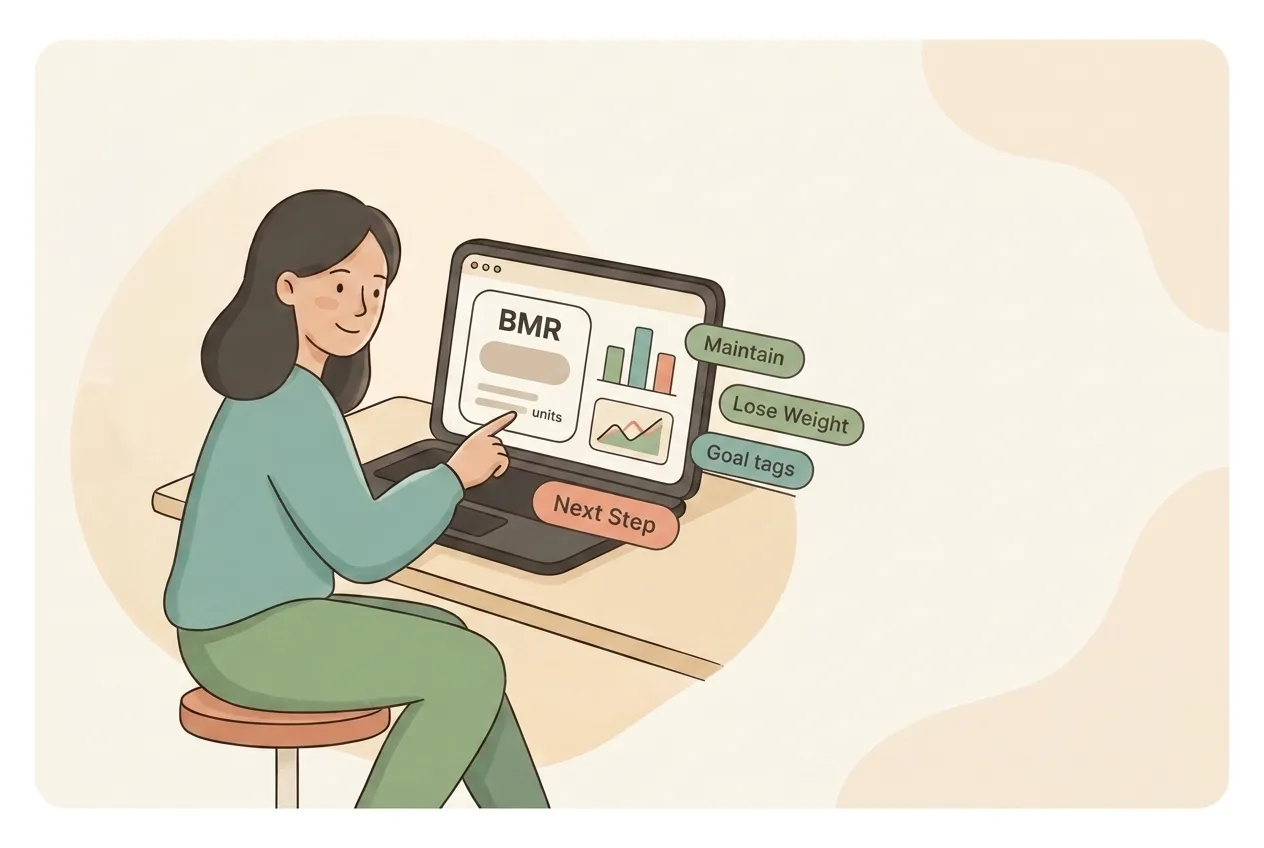
A better results page gives the number and the interpretation.
Use this structure:
1. Show the BMR number clearly
Start with the result.
Your estimated BMR is 1,420 calories per day.
Don’t bury the number after paragraphs of explanation. The visitor came for the result.
2. Explain what it means
Use plain language.
This is an estimate of what the body uses at rest for basic functions like breathing, circulation, and temperature regulation. It is not a full daily calorie target.
That final sentence matters. Many people mistake BMR for a daily food target. Nutrition coaches know that can lead to under-eating, frustration, and poor adherence.
3. Add context based on activity level
If the visitor selected “lightly active,” “moderately active,” or “very active,” explain how that changes the picture.
Because you selected “moderately active,” your daily calorie needs are likely higher than your BMR. Movement, training, digestion, and daily life all add to your total needs.
This is where your coaching expertise shows up. You are teaching them how to think, not just giving them a number.
4. Connect the result to their goal
Someone choosing weight loss needs different language than someone choosing energy, muscle gain, or maintenance.
For weight loss:
If your goal is fat loss, the next step is not to eat at your BMR. The next step is to understand your total daily needs, then create a realistic deficit you can maintain.
For energy:
If your goal is better energy, your result can help you spot whether you may be under-fueling, especially if you train regularly or have a busy schedule.
For muscle gain:
If your goal is building muscle, your BMR is only the baseline. Protein, training, recovery, and a smart calorie surplus matter more than chasing the lowest number.
5. Offer the next step
End with a gentle CTA.
Want the next layer? Use our calorie and macro calculator to estimate your daily calorie target and macro split.
Or, if you want to move them toward coaching:
If you want help turning this number into a realistic nutrition plan, reply to the email we just sent you and tell us your goal.
The best result pages do not overwhelm people. They make the next step obvious.
How to Follow Up After Someone Uses Your BMR Calculator
The calculator captures attention. The follow-up turns attention into trust.
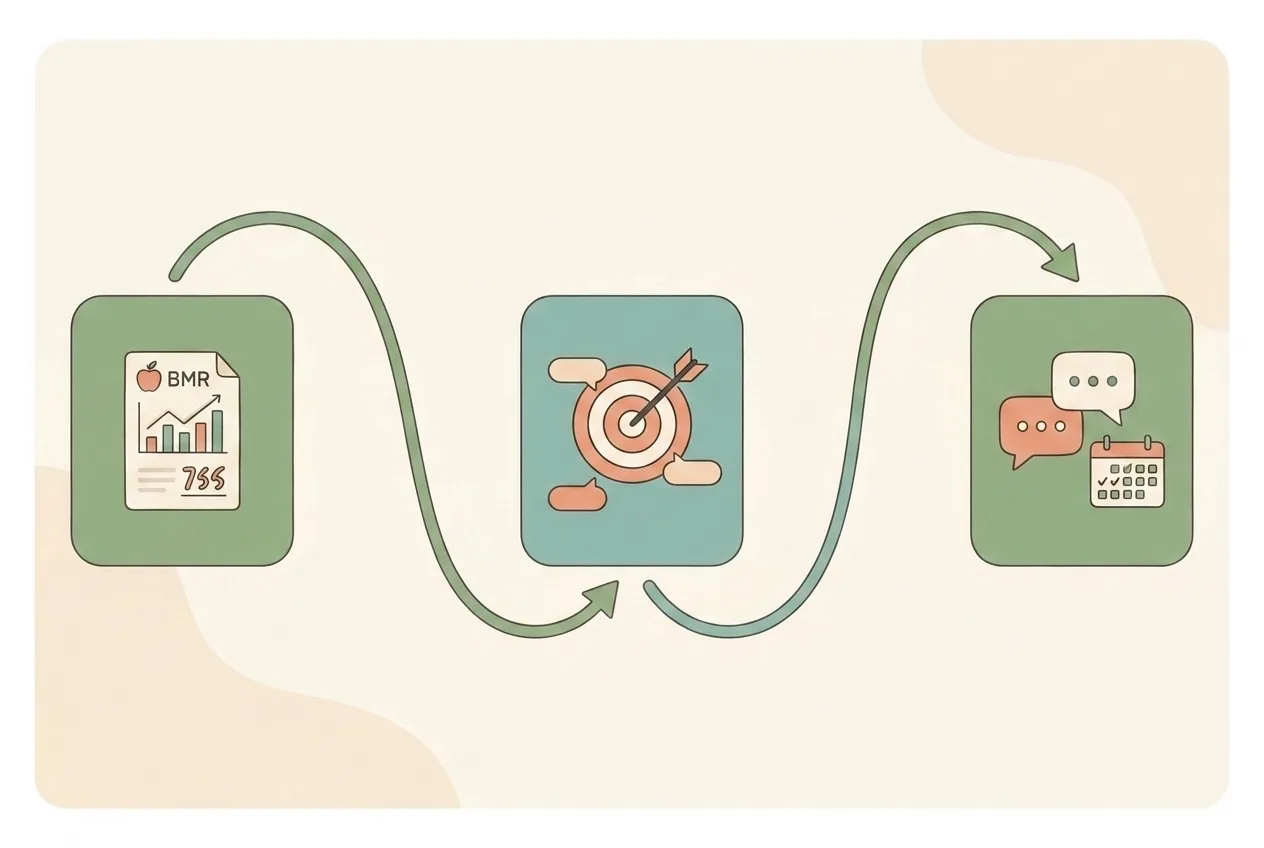
You do not need a complicated 14-email automation. Start with three emails.
Email 1: Send the result and explain the biggest mistake
Subject line: Your BMR result, and what it does not mean
In this email, repeat their result and explain the difference between BMR and daily calorie needs. The goal is to protect them from using the number incorrectly.
Core message:
Your BMR is your baseline, not your diet target. Eating at or below that number for long periods can leave many people tired, hungry, and inconsistent. The smarter next step is understanding your total daily needs.
CTA:
Want a fuller estimate? Try the calorie and macro calculator here.
Email 2: Connect their goal to a practical next step
Subject line: How to use your BMR for your goal
Segment this email by goal if possible.
For weight loss leads, explain that sustainable progress usually comes from a realistic deficit and consistency. For energy leads, talk about under-fueling and meal timing. For muscle gain leads, talk about protein, training, and recovery.
Keep the advice useful but incomplete. You are not trying to deliver an entire coaching program by email. You are showing that there is a smarter path than guessing.
CTA:
If you want a second pair of eyes on your result, reply with your goal and we will point you in the right direction.
Email 3: Invite a coaching conversation
Subject line: Want help turning this into a plan?
By the third email, they have received value twice. Now it is reasonable to invite them to the next step.
Use low-pressure language:
If you want help turning your BMR, goals, and lifestyle into a nutrition plan you can actually follow, this is exactly what coaching is for.
CTA options:
- Book a discovery call
- Reply with one nutrition question
- Take a nutrition profile quiz to understand their eating style
That last option is useful if the lead is still curious but not ready to talk. A quiz can help you learn more about their habits before you offer a call.
How to Promote a BMR Calculator
A BMR calculator does not help if it stays hidden on your website.
Promote it wherever people already ask nutrition questions.
Instagram bio
Use a direct link or a link-in-bio page.
Simple copy:
Free BMR Calculator: Find your calorie baseline in 30 seconds.
This works well for nutrition coaches who regularly post about metabolism, energy, weight loss, or meal planning.
Instagram Stories
Use a poll or question sticker first.
Examples:
- “Do you know your calorie baseline?”
- “Have you ever calculated your BMR?”
- “Do you feel like you eat enough for your energy level?”
Then follow with the calculator link.
Blog posts
Mention the calculator inside nutrition articles where the reader is already thinking about calories, energy, or meal planning. Link it early, not only at the end.
If you already have a guide like lead magnet ideas for coaches, the BMR calculator can become the deeper supporting article that explains one specific tool in detail.
Email newsletter
Send it as a quick resource:
This week’s tool: a free BMR calculator. Use it to find your calorie baseline, then read the notes below before changing your food.
That framing is important. It positions you as responsible and thoughtful, not as someone handing out generic calorie advice.
Discovery calls
You can also send the calculator before a consultation.
Instead of asking a potential client to show up cold, send:
Before our call, take 60 seconds to calculate your BMR. It will give us a helpful starting point for talking about your nutrition goals.
That makes the call more specific from the beginning.
Mistakes to Avoid
A BMR calculator is simple, but a few mistakes can weaken trust.
Mistake 1: Treating BMR as a meal plan
BMR is not a complete nutrition plan. It does not account for lifestyle, training history, food preferences, medical context, stress, sleep, or adherence.
Say that clearly.
This does not make the calculator weaker. It makes your coaching more credible.
It also keeps the conversation aligned with how public health sources explain weight and energy balance. The National Institute of Diabetes and Digestive and Kidney Diseases notes that body weight is affected by calories used through physical activity and daily living, along with other health and lifestyle factors, in its guide to factors affecting weight and health. That is exactly why a BMR result should lead into context, not a one-size-fits-all instruction.
Mistake 2: Using fear-based copy
Avoid lines like “Your metabolism is broken” or “This number proves why you cannot lose weight.”
Nutrition leads are often already frustrated. Fear may get clicks, but it does not create the kind of trust that leads to coaching.
Better:
Your BMR gives us a starting point. The next step is understanding how your habits, activity, and goals fit around that baseline.
Mistake 3: Asking for too much too soon
Don’t ask for full intake details before showing a simple result. Save deeper questions for the follow-up or consultation.
The calculator should feel light. The coaching can go deeper later.
Mistake 4: Sending everyone the same follow-up
Someone who wants fat loss and someone who wants better energy need different guidance. Even a simple split by goal makes your emails feel more personal.
If you only segment one thing, segment by goal.
Mistake 5: Forgetting the human next step
A calculator can start the relationship, but it should not replace your voice.
Add a personal invitation:
If this number surprised you, reply and tell us what stood out.
That small line turns a one-way automation into a conversation.
Example BMR Calculator Funnel for a Nutrition Coach
Here is a simple funnel you can copy.
Landing page headline:
Find Your Calorie Baseline in 30 Seconds
Subheadline:
Use this free BMR calculator to estimate what your body burns at rest, then learn what that number means for your nutrition goals.
Questions:
- Age
- Height
- Weight
- Sex
- Activity level
- Primary goal
- Biggest nutrition struggle
- Email address
Results page:
Your estimated BMR is [result] calories per day. This is your resting baseline, not your full daily calorie target.
Then add a short explanation based on their goal.
CTA:
Want your full daily target too? Try the calorie and macro calculator next.
Email sequence:
- Your BMR result, explained simply
- How to use your result for your goal
- Want help turning this into a plan?
That is enough to launch. You can improve it later once real leads start coming through.
FAQ: BMR Calculators for Nutrition Coaches
What is the best BMR calculator for nutrition coaches?
The best BMR calculator for nutrition coaches is one that captures leads, explains the result clearly, and connects the visitor to a next step. A plain calculator gives a number. A coaching-focused calculator turns that number into education, segmentation, and follow-up.
Should nutrition coaches use BMR or TDEE?
Nutrition coaches should usually explain both. BMR is the resting baseline, while total daily energy expenditure includes activity and daily movement. For lead capture, BMR is a simple first step because it is easy to understand. For planning, TDEE is more useful.
Is a BMR calculator better than a BMI calculator?
A BMR calculator is usually better for nutrition coaching because it connects directly to calorie needs and meal planning. A BMI calculator is better for broader body composition awareness. Many coaches use both for different stages of the lead journey.
Can a BMR calculator help get nutrition coaching clients?
Yes, a BMR calculator can help get nutrition coaching clients when it is paired with email capture and follow-up. The calculator attracts people who are already thinking about food, energy, or weight goals. Your follow-up explains what the number means and invites them into a coaching conversation.
What should a BMR calculator results page say?
A BMR calculator results page should show the number, explain that BMR is not the full daily calorie target, connect the result to the visitor’s goal, and offer a next step. The next step might be a macro calculator, a nutrition quiz, or a coaching call.
How fast can a nutrition coach launch a BMR calculator?
With a ready-made template, a nutrition coach can launch a BMR calculator in about 10 minutes. The main work is not the formula. It is customizing the copy, result explanation, and follow-up emails so the tool sounds like your coaching brand.
Start With the Number, Then Build the Relationship
A BMR calculator works because it meets people where they already are. They want a number. They want clarity. They want to stop guessing.
But your job as a nutrition coach is not just to hand them a number. It is to help them understand what the number means, what it does not mean, and what to do next.
That is why a BMR calculator can be such a strong lead magnet. It gives visitors instant value, gives you useful context, and opens the door to a more personal nutrition conversation.
If you want to launch one without building formulas or pages from scratch, start with the BMR Calculator template. You can customize the questions, results page, and follow-up copy, then connect it to your coaching offer. It is free to start.

Lesly Garreau
Product builder, marketing strategist, men's coach
Co-founder of My Mini Funnel. Helping coaches and creators turn followers into clients with simple lead capture tools.